Hair Loss Despite Normal Blood Work: What the Test Misses
Your blood work is normal, yet your hair keeps falling out? What your results don't show and which questions to ask your doctor next.

Monika's lab report shows a ferritin value of 18 µg/l. Next to it, the reference range reads 15 to 150. No flag, no highlight, and the doctor's letter says "iron status unremarkable." As far as the lab is concerned, the matter is closed. Monika is 53 and has been finding noticeably more hair in her brush for months. Her GP glanced at the values and waved her off. For Monika, the real question starts right there.
"All my blood work came back normal." Few sentences come up as often as this one when the topic is hair loss. Sometimes it brings relief, sometimes bewilderment. If the values are fine, what's causing it then? And can something actually be missing even when the lab finds nothing?
Yes, it can. I see two reasons for that. The first is that "within the reference range" means something different from "well supplied at the hair root." The second reason is spoken about even less. The most common causes of hair loss leave no trace whatsoever in a nutrient blood panel. A normal result is therefore no reason for me to stop looking. It simply tells you where you don't need to keep searching. By the end of this article, you'll know which questions to ask your doctor.
AT A GLANCE: A blood value within the reference range shows that a nutrient is circulating in the blood at a concentration found in most healthy people. It does not show how much of it is stored in the tissue, whether the cell is absorbing and activating the nutrient, or whether it is reaching the hair follicle in sufficient amounts. The most common causes of hair loss (namely the hereditary sensitivity of the hair follicles and the delayed shedding that follows a period of physical or emotional stress) are not captured by a nutrient panel at all. Just how little the lower limit of a reference range can tell you about actual supply is illustrated by ferritin. Studies suggest that 30 to 50% of healthy women have no stored iron in their bone marrow. Haematologists are therefore calling for new ferritin reference ranges for women (Martens and DeLoughery, 2023). As of: November 2026.
What Does "Within the Normal Range" Actually Mean for Blood Test Results?
Behind the innocuous phrase "normal range" lies a statistical definition, not a biological one. A reference range typically covers the middle 95% of measurements from a group of people the laboratory has classified as healthy. Anyone falling above or below that range stands out. Anyone within it is statistically typical.
Statistically typical and sufficient for every tissue in your body are, however, two very different things. Think of clothing size M. It fits a great many people, and yet it can be too tight across the shoulders and too loose at the waist. The reference range is that size M. It describes where most of us fall. Where you personally are well served is something it cannot tell you.

Figure: The reference range is that size M. It describes where most of us fall.
Then there is the question of who actually makes up the comparison group. If many people in that group have borderline reserves, the lower threshold shifts downward. With ferritin, that is precisely what happens. Studies suggest that 30 to 50% of healthy women have no stored iron in their bone marrow at all. If a laboratory then derives its lower ferritin threshold from the bottom 2.5% of measured values, a nearly empty iron store registers as normal. Two American haematologists have called for reference ranges for women to be revised. Based on their analysis, several findings point to the body itself drawing the line for ferritin at around 50 µg/l (Martens and DeLoughery, 2023). Monika's result of 18 µg/l sits above her laboratory's lower threshold and at the same time well below this physiological boundary. Add to that the fact that every laboratory works with its own methods and its own thresholds. The same value can quite easily be interpreted differently across two separate reports.
Why does a blood value tell us so little about what actually reaches the hair follicle?
Even a perfectly chosen reference range doesn't solve our second problem. A hair follicle is supplied by fine blood vessels that end in what's called the dermal papilla, a small cushion of cells at the base of the hair root. The cells directly above it are called the hair matrix. They are among the most rapidly dividing cells in the entire body (Almohanna et al., 2019). That's why they constantly need a fresh supply of iron, zinc, B vitamins, amino acids and energy. Whatever circulates in your blood has to pass through several stages before it gets there.
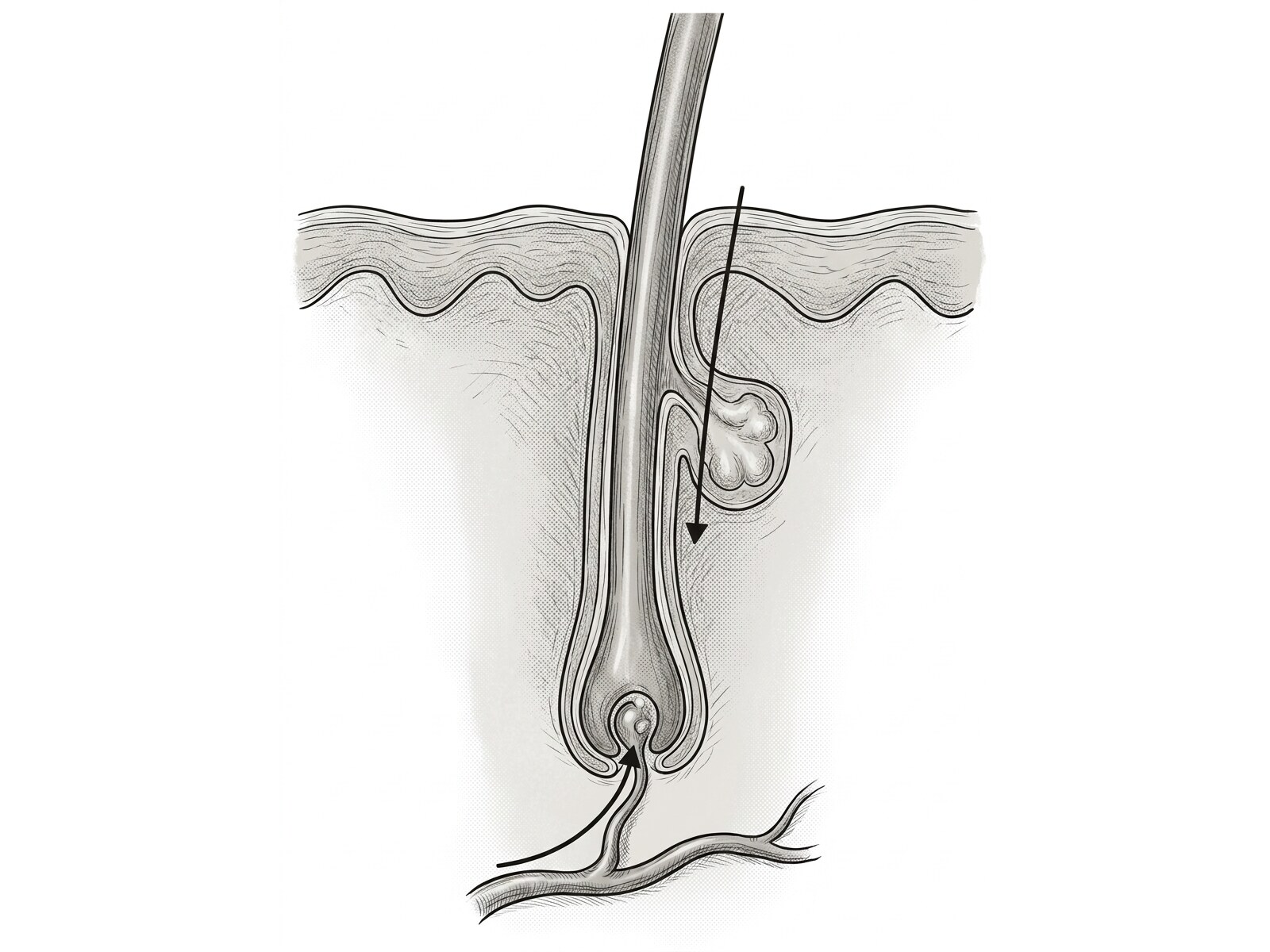
Figure: Nutrient supply to the hair from inside and outside. From the inside, nutrients reach the dermal papilla via the blood vessels; from the outside, they travel along the hair follicle through the scalp. From the book "Bis in die Haarspitzen gesund" by Dr. Holger Scheib.
- Blood flow. The scalp has to deliver the nutrient in the first place. That smoking or minor scalp inflammation can impair the fine blood vessels strikes me as entirely plausible.
- Transport. Many nutrients travel bound to carrier proteins. What's typically measured is the total amount in the blood, regardless of how much of it is actually available to the cells.
- Uptake. The cell needs the right transporters in its membrane to let the nutrient in.
- Activation. Some vitamins only become active after a conversion step. Vitamin B6, for instance, has to be converted to pyridoxal-5-phosphate before enzymes can use it.
- Distribution. When a nutrient runs short, the body prioritises whatever secures short-term survival first, such as cellular energy production.
The first four stages are textbook physiology. The fifth draws on what's known as the triage theory from nutritional science (Ames, 2006). It makes sense to me, because the body operates on this principle in many other contexts too. For the hair follicle specifically, however, it hasn't been directly demonstrated. There it remains a well-reasoned hypothesis.
Think of the water supply in an old house. The plumber measures the pressure at the mains connection in the basement and is satisfied. Up in the attic, the shower still trickles, because a pipe is scaled up, a valve is stuck, or the washing machine on the ground floor is running and claiming the water for itself. The blood test is the measurement in the basement. The hair follicle is the shower under the roof. In the household's pecking order, it sits pretty far down the list.
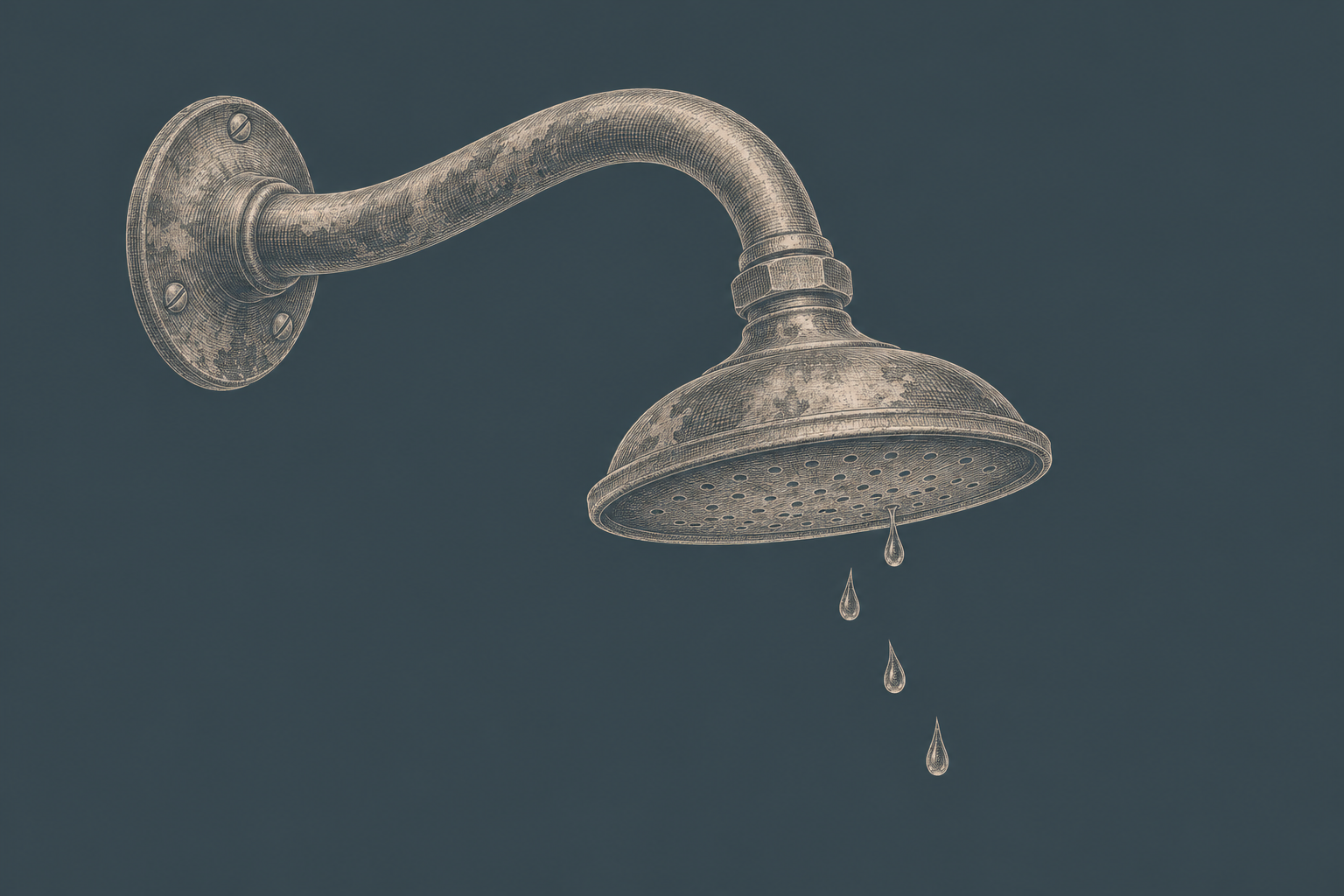
Figure: The blood test is the measurement in the basement. The hair follicle is the shower under the roof.
So let's hold onto this: a blood value is a snapshot of the delivery traffic. It only tells you indirectly how much actually arrives at the hair root.
Alongside the blood, there's a second route to the hair root, namely from the outside, through the scalp and along the hair follicle. That's the route a hair serum takes. How much of it reaches the hair root is, admittedly, less well studied than nutrient supply through diet. It's the route I had in mind when I developed my hair serums.
Which blood values are particularly deceptive in hair loss?
Not every lab value sits equally close to our hair follicles. Five values show up in test results around hair loss more than any others. Each one comes with its own catch.
| Value | What is measured | Where the catch lies | Connection to hair loss |
|---|---|---|---|
| Ferritin | Storage protein for iron | rises during inflammation and can mask an iron deficiency | Study data contradictory, target value disputed |
| Vitamin B12 (serum) | Total vitamin B12 in the blood | also measures vitamin B12 that cells cannot use | Documented in pronounced deficiency, little studied |
| Zinc (serum) | The small fraction of zinc in the blood | fluctuates with time of day, meals and inflammation | Pronounced deficiency proven, mild deficiency contradictory |
| Vitamin D (25-OH vitamin D) | Storage form in the blood | Target values professionally disputed | Study data contradictory |
| Biotin | Rarely measured in routine testing | supplementation distorts other lab values | Benefit without biotin deficiency never cleanly studied |
Take a closer look at ferritin, because this value illustrates the problem most clearly. Ferritin is the storage protein for iron. The blood value roughly reflects how full the iron stores are. At the same time, ferritin rises during infections and inflammation (Trost et al., 2006). A woman with nearly depleted iron stores and a smouldering inflammation can end up with a ferritin value squarely within the normal range. That is why it is worth looking at the inflammation marker CRP and at transferrin saturation as well. Transferrin saturation shows how heavily the transport protein in the blood is loaded with iron.
The other values come with similar catches. Serum vitamin B12 is only a limited marker on its own, because severe functional B12 deficiency has been documented even at normal and elevated serum levels (Hannibal et al., 2016). With zinc, only around 1% of the total amount circulates in the blood. That small fraction also fluctuates with the last meal, the time of day and inflammation (King et al., 2015).
What Do the Studies on Ferritin and Hair Loss Actually Show?
How closely are ferritin levels and our hair connected? This is where the evidence gets messy. In one study of 52 American women with hereditary hair loss, the mean ferritin level came in at 37 µg/l. Among the eleven women without hair loss who served as a comparison group, it was 60 µg/l (Kantor et al., 2003). Both averages, it should be noted, fall within the normal range. In France, 5,110 women between 35 and 60 years of age reported on their hair loss via questionnaire, while ferritin was measured in each of them. Of the women with significant hair loss, 59% had a ferritin level below 40 µg/l; in the rest of the group, it was 48%. The authors, among them researchers from L'Oréal, therefore identified a low iron store as a risk factor for hair loss in premenopausal women (Deloche et al., 2007).
A third study, however, arrives at a different conclusion. At Duke University in the United States, 381 women with hereditary or chronic diffuse hair loss were compared with 76 women without hair loss. Low ferritin was common across all groups. Among the women with hair loss, though, it did not occur more frequently than in the control group (Olsen et al., 2010). A review from the Cleveland Clinic concludes from the literature that the evidence is insufficient both for routine iron testing in everyone with hair loss and for iron supplementation in the absence of anaemia. The authors test their own patients for iron deficiency regardless, because in their experience it leads to better treatment outcomes (Trost et al., 2006). I find that kind of openness genuinely noteworthy. These are experienced clinicians who explicitly label their conviction as exactly that.
Target values vary accordingly. Many laboratories set the lower ferritin threshold at around 15 µg/l. A British review, on the other hand, recommends 70 µg/l for women with increased hair loss (Rushton, 2002). At what level your hair actually benefits, nobody knows with any real precision. Whether a higher ferritin value simply does nothing for hair, or whether no one has ever looked carefully enough, cannot be read from these studies. What is clear is that a ferritin below 30 µg/l identifies iron deficiency in 92% of cases (Almohanna et al., 2019). A ferritin just above the lower threshold, combined with hair loss, is reason enough for me to ask further questions. At a value below 30 µg/l, I would talk to a doctor about iron. Monika's 18 µg/l clearly belongs in that conversation. I would not simply file away a finding like that and move on.
With zinc, the picture is similarly mixed. People with hair loss had, on average, lower zinc levels than the control group in a Korean study (Kil et al., 2013). The same British review, however, finds no evidence that low serum zinc levels cause hair loss (Rushton, 2002). The evidence here is contradictory. That does not mean the connection has been disproved.
Maybe the Blood Test Answered the Wrong Question
Up to this point, we've looked at what a blood test can miss. A nutrient panel, however, only ever tests one single assumption from the outset: that your body is lacking something. The two most common causes of hair loss in women, though, are not deficiency states.
The first cause is hereditary hair loss. It develops because the hair follicles in certain areas of the scalp are more sensitive to the hormone dihydrotestosterone than in others (Price, 2003). This sensitivity is genetically determined. In the follicle itself. There is nothing to see in the blood. Many affected women show no signs of excess male hormones, neither in their bloodwork nor anywhere else on their body (Birch et al., 2002). A hormone profile is worth pursuing above all when additional signs appear alongside the hair loss, such as increased body hair, severe and persistent acne, or irregular cycles. In one study of 109 women with pronounced, predominantly diffuse hair loss, 42 had elevated male hormones, that is 39%. The most common underlying cause was polycystic ovary syndrome. In eleven of those 42 women, however, neither cycle irregularities nor increased body hair were present (Futterweit et al., 1988). If my hair were falling out heavily and over several months, I would bring up hormones with my doctor on my own initiative, even without those additional signs.
In women, hereditary hair loss tends to appear during and after menopause. As estrogen declines, male hormones gain relative weight, without any single value falling outside its reference range. I consider this model plausible, even though the role of androgens in female hair loss has not yet been fully understood (Birch et al., 2002). What happens inside the hair follicle during this process, and how to recognise this form of hair loss early, I've described in my article on hair density in women.
The second cause is what's known as telogen effluvium. That's the term for diffuse hair loss following stress, infection, surgery, childbirth, or a strict diet. It is the most common cause of diffuse hair loss altogether (Malkud, 2015). Its catch is timing. The hair doesn't shed until months after the trigger, according to this review three to four months later. By the time you see a doctor and have blood drawn, the iron level that dropped during last spring's crash diet may well be back within the normal range. Our hair, in other words, is responding to a state that the lab can no longer detect.
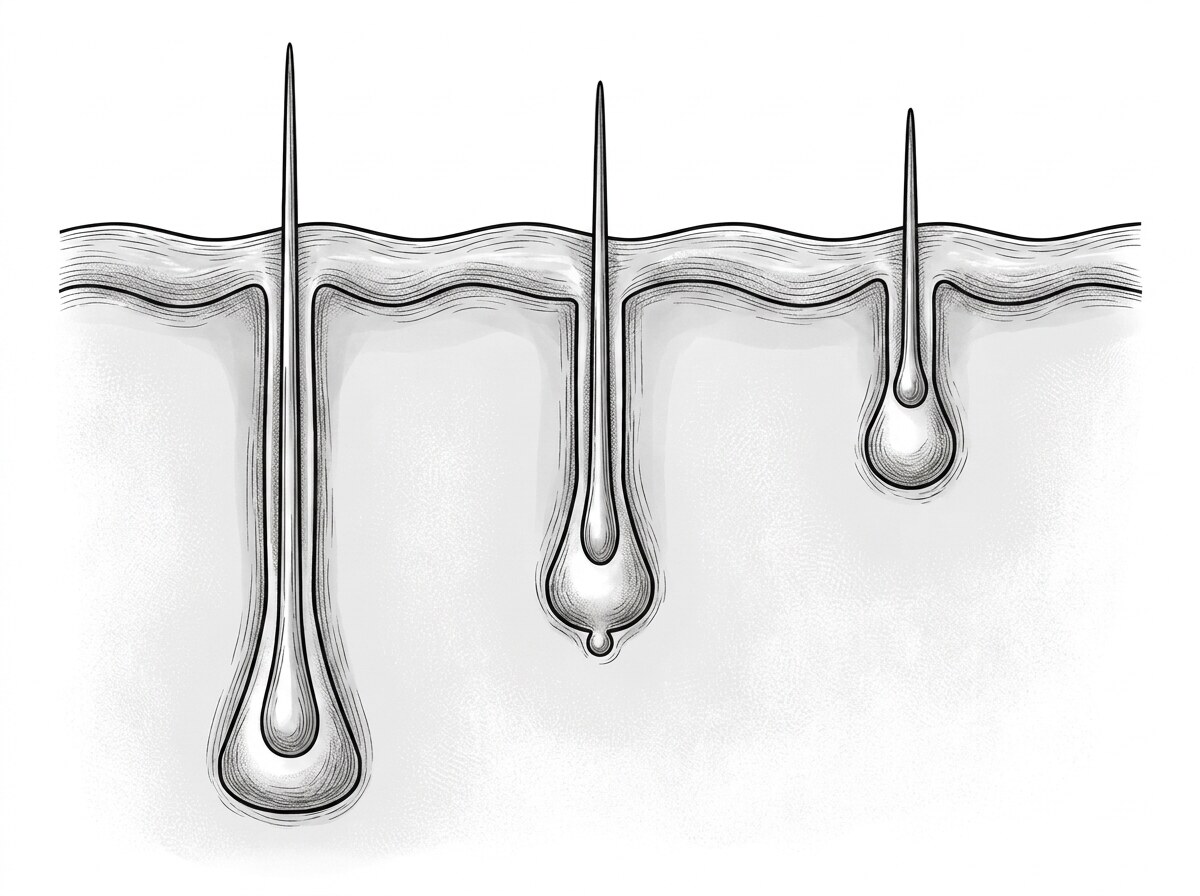
Figure: The three growth phases of a scalp hair. From left to right: growth phase (anagen phase), transitional phase (catagen phase), and resting phase (telogen phase). From the hair book by Dr. Holger Scheib.
A normal blood test, then, does not contradict your hair loss. What it tells you is that you need to look for the cause outside of what a nutrient panel can actually test.
Does Biotin Help When Your Blood Test Is Normal?
With the vitamin most heavily marketed for hair loss, the topic of this article flips in the opposite direction. Here it is the vitamin that interferes with the blood test. Biotin, also known as vitamin B7, assists several enzymes in fat, sugar, and amino acid metabolism. That a genuine biotin deficiency causes hair loss and that biotin then helps is established fact. Whether additional biotin taken by people with adequate levels improves hair quality has never been examined in controlled studies (Soleymani et al., 2017).
What high-dose biotin does reliably, however, is disrupt blood tests. Many laboratory tests rely on the tight binding between biotin and a protein called streptavidin. High biotin doses from supplements occupy these binding sites. In a trial with six healthy adults, one week of 10 mg biotin daily skewed 9 out of 23 such tests. Among the affected values were thyroid markers and vitamin D, both of which tend to appear on lab results ordered for hair loss. Ferritin was unaffected in this trial (Li et al., 2017). A distorted result can point to a thyroid disorder that does not exist, or miss a real one. What the biotin studies actually show, I have laid out in a dedicated article.
What can you actually do when your levels are normal and your hair is still falling out?
A result within the normal range is worth more than no result at all. It just answers a different question from the one you're actually asking. With a few targeted steps, you can get considerably more out of your lab values and reach the point where you can put the bloodwork behind you.
- Start by describing how you live. How do you eat, how heavy is your monthly period, have you had an infection, surgery or a strict diet in the past few months? I consider this conversation more important than any comprehensive blood panel, because only from that context does it become clear which values are actually worth checking in your case.
- Ask for the numbers. "Unremarkable" is an assessment, not a measurement. With the actual value and reference range in front of you, you can see for yourself whether you're sitting comfortably in the middle or hovering just above the threshold.
- Never read ferritin in isolation. Ask for CRP and transferrin saturation as well. Only together do these three values tell you whether a normal ferritin is masking an underlying inflammation.
- Ask about the active fraction when it comes to vitamin B12. Holotranscobalamin is the bioactive form of vitamin B12 bound to its transport protein. Methylmalonic acid is a metabolic byproduct that accumulates when there is too little vitamin B12 working inside the cells (Hannibal et al., 2016). These two values measure a step closer to where it actually matters.
- Stop taking biotin before your blood draw. I recommend a break of at least 48 hours. Also make sure to tell your doctor's practice that you are taking biotin.
- Work backwards. What was happening three to four months ago? An infection, a diet, surgery, a period of intense stress? If a trigger sits there, it explains your hair loss better than any blood value. Once the trigger is gone, the hair follicles usually recover on their own.
- Look at where the hair actually grows. A dermatologist can examine your scalp with a dermatoscope. This examination is called trichoscopy. It shows directly whether hairs of different thicknesses are growing side by side, the typical sign of the hereditary form, or whether an unusually large number of short hairs are sprouting at once, as happens after a telogen effluvium. To stay with the analogy: this is the measurement taken right under the roof. With persistent hair loss, I would always ask for it.
And if your doctor brushes you off? Ask why. Patients who want to understand their own values are an asset, not a nuisance. Good doctors know that. If you still don't get an answer that moves things forward, get a second opinion from a dermatologist who specialises in hair. That is your right.
How blood, scalp and hair follicle connect, and which values to have tested in which order, I cover in detail in my book "Bis in die Haarspitzen gesund". You will also find the threshold values for ferritin, vitamin D, vitamin B12, zinc and TSH laid out side by side. The book comes out on 9 February 2027. Head over to the book page and sign up, and you'll be the first to know where to get it.
A blood value within the normal range tells you that nothing unusual is circulating in your blood. It says very little about your hair follicles. So keep asking until someone looks at the place where your hair actually grows.
My hair serums. No serum replaces a blood value, and a hair serum is not a medication for hair loss. What it does do is deliver the nutrients your scalp cells need for their daily work directly to the scalp. CuraCap Pure and Men each contain 7 ingredients: water, undenatured alcohol, biotin, vitamins B3, B5 and B6, and vitamin C. Sensitive comes without alcohol and without fragrance. You'll find all three at www.curacap.ch/en/shop. We ship directly to Switzerland and Liechtenstein. If you're in the EU, you can still order by adding your name to the interest list there. I'll be in touch.
FAQ
What ferritin level is sufficient for hair health? The studies don't agree on a single threshold. Recommendations range from the lower laboratory limit of around 15 µg/l up to 70 µg/l. If your ferritin is below 30 µg/l and you're also experiencing hair loss, I'd bring it up with your doctor and talk about iron. Always read ferritin together with the inflammation marker CRP.
Can I have a nutrient deficiency even when my blood values are normal? Yes. A normal serum value doesn't reliably rule out a shortage at the tissue level, for instance, because inflammation can push ferritin up, or because vitamin B12 in the serum includes fractions the cells can't actually use. Functional markers like methylmalonic acid help put things in perspective.
Why am I losing hair when all my values are normal? Because the most common causes aren't deficiency states. With hereditary hair loss, the issue lies in the sensitivity of the hair follicles. Telogen effluvium, on the other hand, lags months behind whatever triggered it. Neither shows up on a nutrient panel. A trichoscopy with a dermatologist will.
Does biotin interfere with my blood test results? Yes, in high doses biotin disrupts many lab tests, including thyroid values. Stop taking it at least 48 hours before your blood draw, and let the practice know you've been taking it.
How long does it take for better nutrient levels to show up in the hair? Several months. Hair grows on average around one centimetre per month, and follicles in the resting phase need time before they become active again. A blood value changes considerably faster than the picture your hair presents.
References
- Martens K, DeLoughery TG. Sex, lies, and iron deficiency: a call to change ferritin reference ranges. Hematology Am Soc Hematol Educ Program. 2023;2023(1):617–621. PubMed 38066931
- Almohanna HM, Ahmed AA, Tsatalis JP, Tosti A. The Role of Vitamins and Minerals in Hair Loss: A Review. Dermatol Ther (Heidelb). 2019;9(1):51–70. PubMed 30547302
- Ames BN. Low micronutrient intake may accelerate the degenerative diseases of aging through allocation of scarce micronutrients by triage. Proc Natl Acad Sci U S A. 2006;103(47):17589–94. PubMed 17101959
- Trost LB, Bergfeld WF, Calogeras E. The diagnosis and treatment of iron deficiency and its potential relationship to hair loss. J Am Acad Dermatol. 2006;54(5):824–44. PubMed 16635664
- Hannibal L, Lysne V, Bjørke-Monsen AL, Behringer S, Grünert SC, Spiekerkoetter U, et al. Biomarkers and Algorithms for the Diagnosis of Vitamin B12 Deficiency. Front Mol Biosci. 2016;3:27. PubMed 27446930
- King JC, Brown KH, Gibson RS, Krebs NF, Lowe NM, Siekmann JH, et al. Biomarkers of Nutrition for Development (BOND)-Zinc Review. J Nutr. 2015;146(4):858S-885S. PubMed 26962190
- Kantor J, Kessler LJ, Brooks DG, Cotsarelis G. Decreased serum ferritin is associated with alopecia in women. J Invest Dermatol. 2003;121(5):985–8. PubMed 14708596
- Deloche C, Bastien P, Chadoutaud S, Galan P, Bertrais S, Hercberg S, et al. Low iron stores: a risk factor for excessive hair loss in non-menopausal women. Eur J Dermatol. 2007;17(6):507–12. PubMed 17951130
- Olsen EA, Reed KB, Cacchio PB, Caudill L. Iron deficiency in female pattern hair loss, chronic telogen effluvium, and control groups. J Am Acad Dermatol. 2010;63(6):991–9. PubMed 20947203
- Rushton DH. Nutritional factors and hair loss. Clin Exp Dermatol. 2002;27(5):396–404. PubMed 12190640
- Kil MS, Kim CW, Kim SS. Analysis of serum zinc and copper concentrations in hair loss. Ann Dermatol. 2013;25(4):405–9. PubMed 24371385
- Price VH. Androgenetic alopecia in women. J Investig Dermatol Symp Proc. 2003;8(1):24–7. PubMed 12894991
- Birch MP, Lalla SC, Messenger AG. Female pattern hair loss. Clin Exp Dermatol. 2002;27(5):383–88. PubMed 12190638
- Futterweit W, Dunaif A, Yeh HC, Kingsley P. The prevalence of hyperandrogenism in 109 consecutive female patients with diffuse alopecia. J Am Acad Dermatol. 1988;19(5 Pt 1):831–6. PubMed 3192772
- Malkud S. Telogen Effluvium: A Review. J Clin Diagn Res. 2015;9(9):WE01–3. PubMed 26500992
- Soleymani T, Lo Sicco K, Shapiro J. The Infatuation With Biotin Supplementation: Is There Truth Behind Its Rising Popularity? A Comparative Analysis of Clinical Efficacy versus Social Popularity. J Drugs Dermatol. 2017;16(5):496–500. PubMed 28628687
- Li D, Radulescu A, Shrestha RT, Root M, Karger AB, Killeen AA, et al. Association of Biotin Ingestion With Performance of Hormone and Nonhormone Assays in Healthy Adults. JAMA. 2017;318(12):1150–1160. PubMed 28973622
Dr Holger Scheib is a chemist and Honorary Associate Professor at the University of Queensland. As “The HealthChemist” he translates research on ingredients and nutrition into plain language. More about me
Shall I send you the next article?
I write irregularly but thoroughly: new articles, honestly sorted into proven, plausible and hypothesis. No spam, no sales funnel.
Last updated: 16 November 2026