Biotin for Your Hair: When to Save Your Money
Biotin only helps your hair if you are truly deficient. What the studies on biotin supplements show, and why 10,000 µg can skew your blood tests.

On many biotin packages at the drugstore, two numbers appear side by side that almost nobody connects. At the top: "10,000 µg biotin per tablet." Below that: "20,000% of the nutrient reference value." The EU has set the nutrient reference value for biotin at 50 micrograms per day (Regulation (EU) No. 1169/2011). A single tablet delivers 200 times that amount. That sounds like a lot of effect. But is it?
I know the impulse to reach for that package firsthand. My wife Christine and I spent a four-figure sum over the years on shampoos, hair tonics and capsules from drugstores and pharmacies, because the idea felt so obvious: her hair must be missing something. What we were really paying for, every single time, was hope. Today I understand why that logic so rarely holds up with a biotin tablet. Biotin helps your hair when your body doesn't have enough of it. If you already have enough, every additional tablet does nothing more for your hair. On top of that, high doses distort your blood results (exactly the values your doctor needs to find the actual cause of your hair loss).
AT A GLANCE: Biotin, also known as vitamin B7, is a coenzyme the body needs for fat, sugar and amino acid metabolism, including in the hair follicles. When there is a genuine biotin deficiency, supplementation demonstrably restores hair and nail health. Without a deficiency, no benefit of a biotin tablet for hair has been established. High doses also distort many laboratory values. A literature review from 2017 found exactly 18 documented cases in which biotin helped with hair or nail changes. In all 18 cases, an underlying condition was present (Patel et al., 2017). As of November 2026.
What Does Biotin Actually Do in the Body?
Biotin belongs to the water-soluble B vitamins. Depending on the textbook, it goes by the name vitamin B7 or vitamin H. The H originally stood for "hair and skin", which, in hindsight, practically wrote its own shelf placement in the drugstore. Its actual job in the body sounds far less glamorous. And that's precisely why it tells us so much about the question of hair.
Biotin works as a coenzyme. That's what we chemists call a helper molecule (one that certain enzymes simply cannot function without). In humans, five such enzymes depend on biotin: the so-called carboxylases. They attach carbon dioxide to other molecules (Almohanna et al., 2019). Only through this process does the synthesis of fatty acids, the breakdown of certain amino acids, and the regeneration of glucose become possible. These are three metabolic pathways that any cell with high energy demands cannot do without over time.
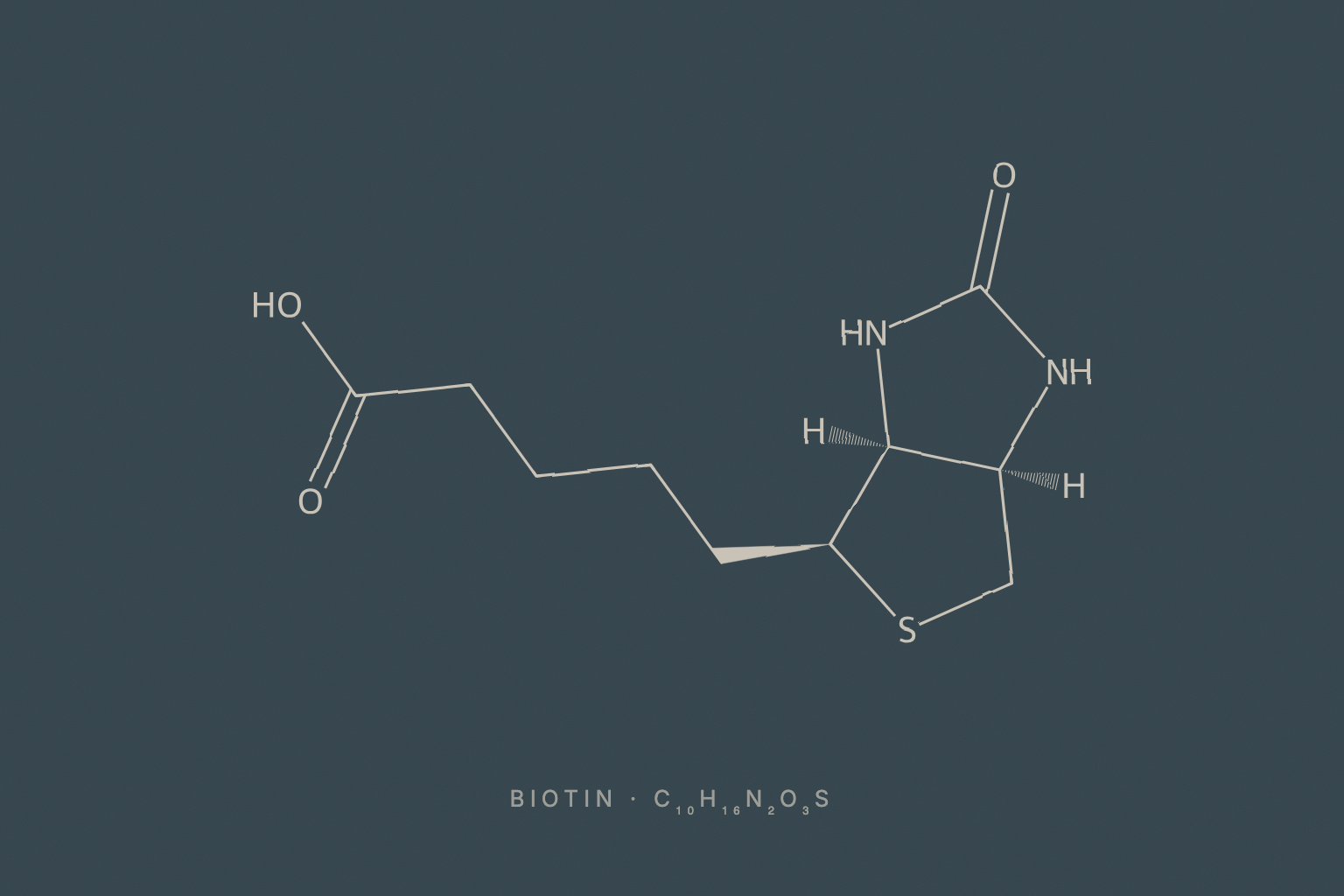
Figure: Structural formula of biotin (vitamin B7), molecular formula C10H16N2O3S. Via the carboxylic acid group at the end of the side chain (left in the image), biotin is bound to its enzymes, the carboxylases. (PubChem, CID 171548)
I like to think of biotin as the baking trays in a bakery. Without trays, no bread comes out of the oven. If they run out, production stops, no matter how much flour is sitting in the storeroom. But if there are already enough trays, adding a hundred more won't produce a single extra loaf. The bottleneck then lies somewhere else entirely: the oven, the dough, the staff.
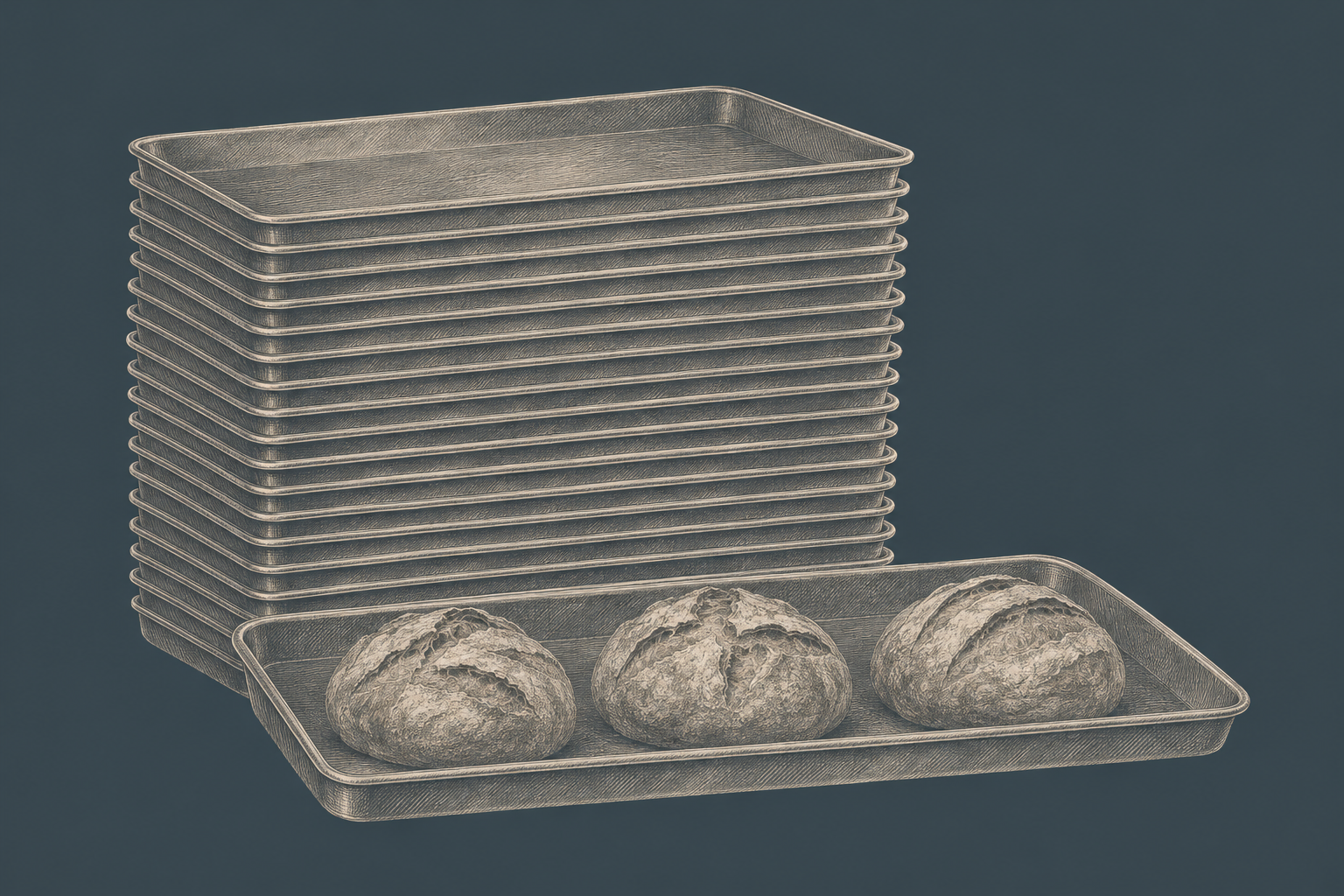
Figure: Once there are enough baking trays, adding a hundred more won't produce a single extra loaf.
Why does a biotin deficiency show up in the hair so early? The cells of the hair root (more precisely, those of the so-called hair matrix) divide constantly. They are among the most rapidly dividing cells in the entire body (Almohanna et al., 2019). A hair follicle is, in that sense, a high-performance organ with considerable energy demands. When our metabolism falls out of balance, my understanding is that the body cuts back first where survival is not at stake, and unfortunately, that includes our hair. That a biotin deficiency leads to hair loss is therefore well established and has been documented for decades. That taking extra biotin will grow more hair when your levels are already adequate does not follow from that. Think back to the bakery.
How much biotin do you actually need, and how much is in those capsules?
The question of daily requirements leads straight back to the label. The European Food Safety Authority, EFSA for short, has derived an adequate intake of 40 micrograms of biotin per day for adults (EFSA, 2014). The nutrient reference value on the packaging sits slightly higher at 50 micrograms. It is a calculation figure for the label, so that all manufacturers work from the same number. Both values are in the same ballpark. The tablets on the shelf are not.
| Amount per day | Multiple of EFSA adequate intake (2014) | Classification |
|---|---|---|
| 40 µg | 1 | adequate intake for adults according to EFSA |
| 50 µg | 1.25 | nutrient reference value on the label (EU, 2011) |
| 5,000 µg | 125 | daily dose in a Brazilian study (Valentim et al., 2024) |
| 10,000 µg | 250 | high-dose tablet widely available in retail |
A varied diet covers your needs without much effort, because cooked eggs, nuts, oats, legumes and mushrooms all contain meaningful amounts. On top of that, our gut bacteria produce biotin themselves. How much of it actually reaches the bloodstream has not been cleanly established to this day. A large review on vitamins and minerals in hair loss notes that biotin deficiency is rare in people eating normally. Severe biotin deficiency in healthy individuals with a normal diet has never been described. And no study supports the idea that biotin supplementation helps with hereditary or diffuse hair loss (Almohanna et al., 2019).
So why 10,000 micrograms? Biotin is well tolerated and cheap to produce. A big number on the packaging simply sells better than a small one. For me, the size of the dose says more about the marketing than it does about what your body actually needs.
When Does Biotin Actually Help Your Hair?
Where a genuine biotin deficiency exists, supplementation works clearly. The causes of such a deficiency are fairly well defined.
- Inherited biotinidase deficiency. Biotinidase is the enzyme that recycles biotin in the body. When this enzyme is missing due to a genetic condition, hair falls out and the skin becomes inflamed. Without treatment, severe developmental disorders can follow. In Germany, Austria, and Switzerland, this condition is therefore part of the newborn screening programme. Here, biotin supplementation works reliably.
- Large amounts of raw egg white. Raw egg white contains avidin, a protein that binds to biotin like a hook-and-loop fastener, rendering it unusable by the body. Cooking destroys this ability. Anyone who consumes large quantities of raw eggs over a prolonged period can develop a biotin deficiency (Almohanna et al., 2019). Today, this is a rarity.
- Isotretinoin. This acne medication reduces biotinidase activity. In a study of 42 patients, activity dropped to roughly half after 30 days (Schulpis et al., 1999). Blood biotin levels, incidentally, remained unchanged during those 30 days. I consider it plausible that some of the hair loss seen with isotretinoin occurs via the biotinidase pathway. Whether targeted biotin supplementation offers protection here, we simply do not know.
- The antiepileptic drug valproic acid, chronic alcohol consumption, and pregnancy. In these situations, biotin status can decline (Almohanna et al., 2019). A connection to hair loss strikes me as plausible. Targeted studies on this, to my knowledge, do not exist.
Among women with hair loss, a figure comes up that you may have encountered on advice websites. Hair specialist Ralph Trüeb from Wallisellen near Zurich found that 38% of women who came to his practice in 2014 with hair loss had a biotin level below his deficiency threshold (Trüeb, 2016). The analysis did not include a comparison group of women without hair loss. According to the same paper, blood biotin levels can fluctuate by up to 100% from day to day, which is why Trüeb recommends two measurements on separate days. The work was supported by the pharmaceutical company Merz. I do not find that objectionable. Without industry funding, many of these studies simply would not exist. What is particularly telling is what Trüeb himself concludes from his findings. He explicitly rejects biotin supplementation for all women with hair loss. He requires the deficiency to be established first, through medical history, examination, and blood values. Only then is targeted supplementation warranted.
A genuine biotin deficiency, incidentally, rarely shows up in the hair alone. Skin rashes and brittle nails are typical accompanying signs (Almohanna et al., 2019). The 18 cases from the literature review in the box above all had an underlying condition without exception (Patel et al., 2017). Biotin helps your hair, then, when it was genuinely missing in the first place.
What Does Biotin Actually Do When There's No Deficiency?
The vast majority of people buying biotin supplements have no biotin deficiency. For exactly this group, there are surprisingly few controlled studies. A 2017 review found not a single clinical trial that had tested biotin for any form of hair loss up to that point (Soleymani et al., 2017). Not much has been added since.
One of the few more recent studies comes from Brazil. Ten healthy men without any hair problems went through three treatments in sequence, each lasting 14 days. They either applied 5%ige Minoxidil to the scalp, took 5 mg of biotin daily, or did both. The researchers measured how quickly hair grew at the back of the head. Biotin alone did not change the growth rate. Minoxidil alone, for that matter, showed no effect over those two weeks either. Only the combination produced a small, statistically significant result (Valentim et al., 2024). What does that tell us? Observing ten men with healthy scalps over two weeks each provides an initial signal, nothing more. The study has another limitation worth noting: all participants knew which treatment they were receiving at any given time. And since none of them had hair loss to begin with, the study says nothing about hair loss at all.
Other studies sound more promising at first glance. An Iranian double-blind trial examined injections of biotin and dexpanthenol in diffuse hair loss, comparing preparations from two different manufacturers (Samadi et al., 2022). Hair loss decreased in both groups. What is missing is a sham-treatment group. Without a placebo control, there is no way to say whether anything worked at all, let alone whether the effect came from the biotin or the dexpanthenol.
Much the same applies to studies on multi-ingredient products. One example from this year looked at a capsule containing millet extract, pantothenic acid, L-cystine and biotin. 112 people with mild diffuse hair loss took it for twelve weeks (Proksch and Bartylla, 2026). Hair density improved by the end, and 82% of participants were satisfied with the outcome. There was no comparison group. The study was funded by Bayer, the manufacturer of the capsule, which was also involved in the study design and the manuscript, according to the publication. Results like these have their value. What this kind of study design cannot tell you, by its very nature, is which of the four ingredients is actually doing the work.
If you enjoy reading studies yourself, keep an eye on three things in particular. Is there a placebo control group? Was biotin tested on its own or as part of a blend? And who paid for the study? The number of participants alone tells you relatively little about the quality of a trial.
Let's sort through what the evidence actually shows for people without a biotin deficiency. In hereditary hair loss, no one has yet tested biotin alone against a placebo. I also see no biochemical reason why a coenzyme would change the sensitivity of hair follicles to hormones. The same study is missing for diffuse thinning without a deficiency, while in multi-ingredient products the reported effects cannot be attributed to biotin specifically. Whether a benefit without deficiency simply does not exist, or whether no one has measured it cleanly yet, cannot be read from the literature. My assessment is that it is unlikely, not least for the reason I mentioned earlier about the bakery with too many baking trays. Without a confirmed deficiency, I would not buy biotin tablets for your hair.
And Biotin Applied Directly to Your Scalp?
Everything I've raised so far concerns the swallowed tablet in people without a deficiency. What the same vitamin does when you apply it to your scalp is a different question. On the scalp, Biotin takes a different route than when swallowed, yet its job inside the cell remains the same. It is the building block that carboxylases need to do their work, and the hair matrix is among the most actively dividing tissues in the body. How much of it actually reaches the hair root, though, is less well studied than the supply through food.
A hair serum is of course not a medication for hair loss. It does, however, deliver exactly the nutrients that your scalp cells need for their daily work. You should know who you're dealing with. I have developed hair serums containing Biotin myself, and my wife and I have had good experiences with them. Those experiences are subjective and not backed by any scientific study. If you'd like to try it for yourself, you'll find my serums in the CuraCap shop.
Why Do So Many People Swear by Biotin?
Head hair grows about one centimetre per month, and it is precisely this slowness that makes self-experimentation so deceptive. Many forms of hair loss occur with a time delay. After an infection, a strict diet, childbirth, or a period of intense stress, hair tends to shed more heavily two to three months later. Doctors call this telogen effluvium, meaning a pronounced shift of many hairs into the resting phase. Once the trigger disappears, the hair follicles typically recover on their own.
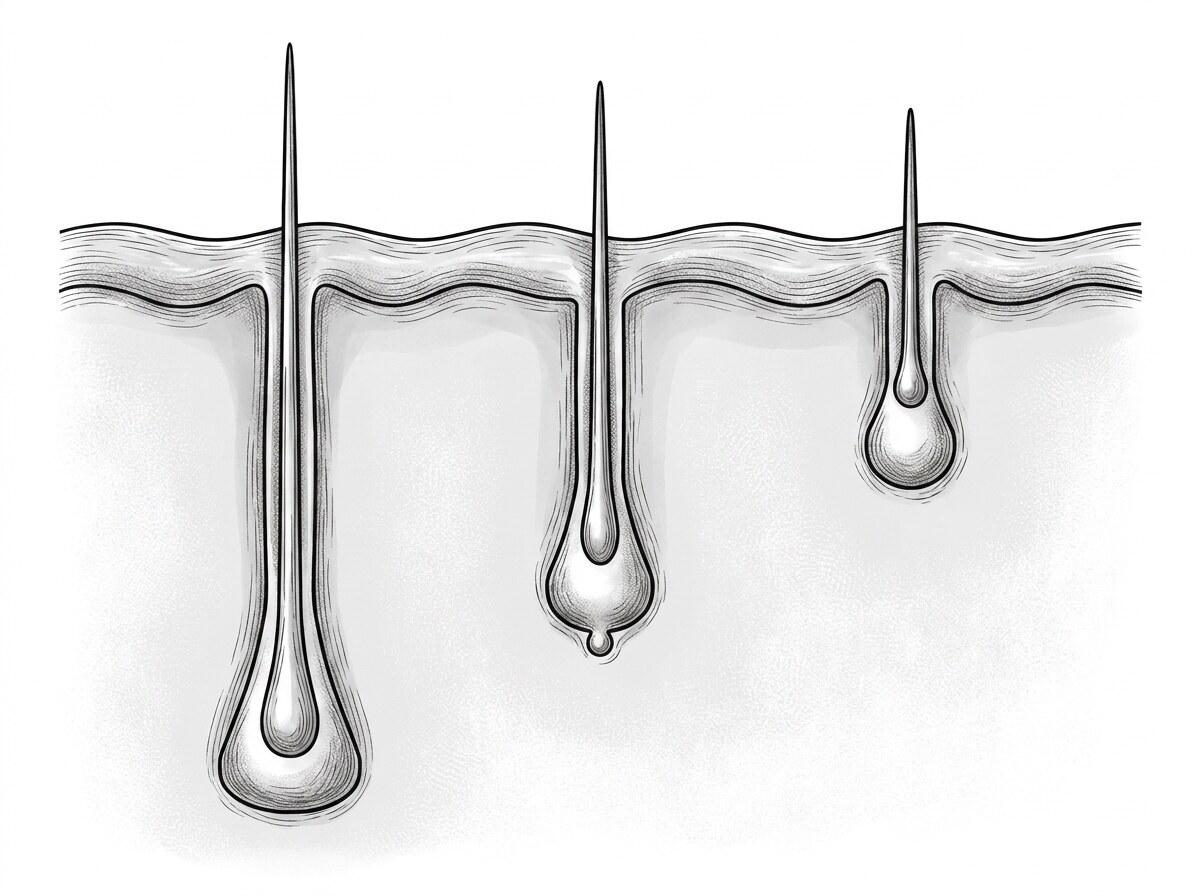
Figure: The three growth phases of a head hair. From left to right: growth phase (anagen phase), transitional phase (catagen phase), and resting phase (telogen phase). From the hair book by Dr. Holger Scheib.
And when do we reach for the biotin pack? Exactly when the most hair is turning up in the brush. If the shedding settles down a few months later on its own, the vitamin gets the credit. Whoever opens an umbrella just before the rain stops on its own might easily mistake the umbrella for a weather miracle. On top of that, we rarely change just one thing during these phases, because at the same time we tend to eat more regularly, sleep more, or finally get our iron levels checked. Which of those steps actually made the difference is impossible to untangle through self-experimentation.

Figure: Whoever opens an umbrella just before the rain stops on its own might easily mistake the umbrella for a weather miracle.
The gap between popularity and evidence is, incidentally, itself already a subject of research. The 2017 review addresses this directly in its title, contrasting clinical efficacy with widespread public enthusiasm (Soleymani et al., 2017). That does not make the many personal accounts wrong. Someone who holds a noticeably thicker ponytail in their hand after six months of taking biotin genuinely has that ponytail. The explanation for it, however, lies in the hair cycle.
Can Biotin Cause Harm or Skew Your Lab Results?
Biotin is very well tolerated. There is no established upper limit for intake, because no cases of toxicity are known (Almohanna et al., 2019). The real risk sits somewhere most people never think to look: in the lab. Many modern blood tests use the exceptionally strong bond between biotin and a protein called streptavidin as a kind of molecular glue. When there is a lot of biotin circulating in the blood, it occupies those binding sites. Think of it as someone parking in every spot outside the testing device before the actual measurement molecules even arrive. Depending on how the test is designed, the result then comes out falsely high or falsely low.
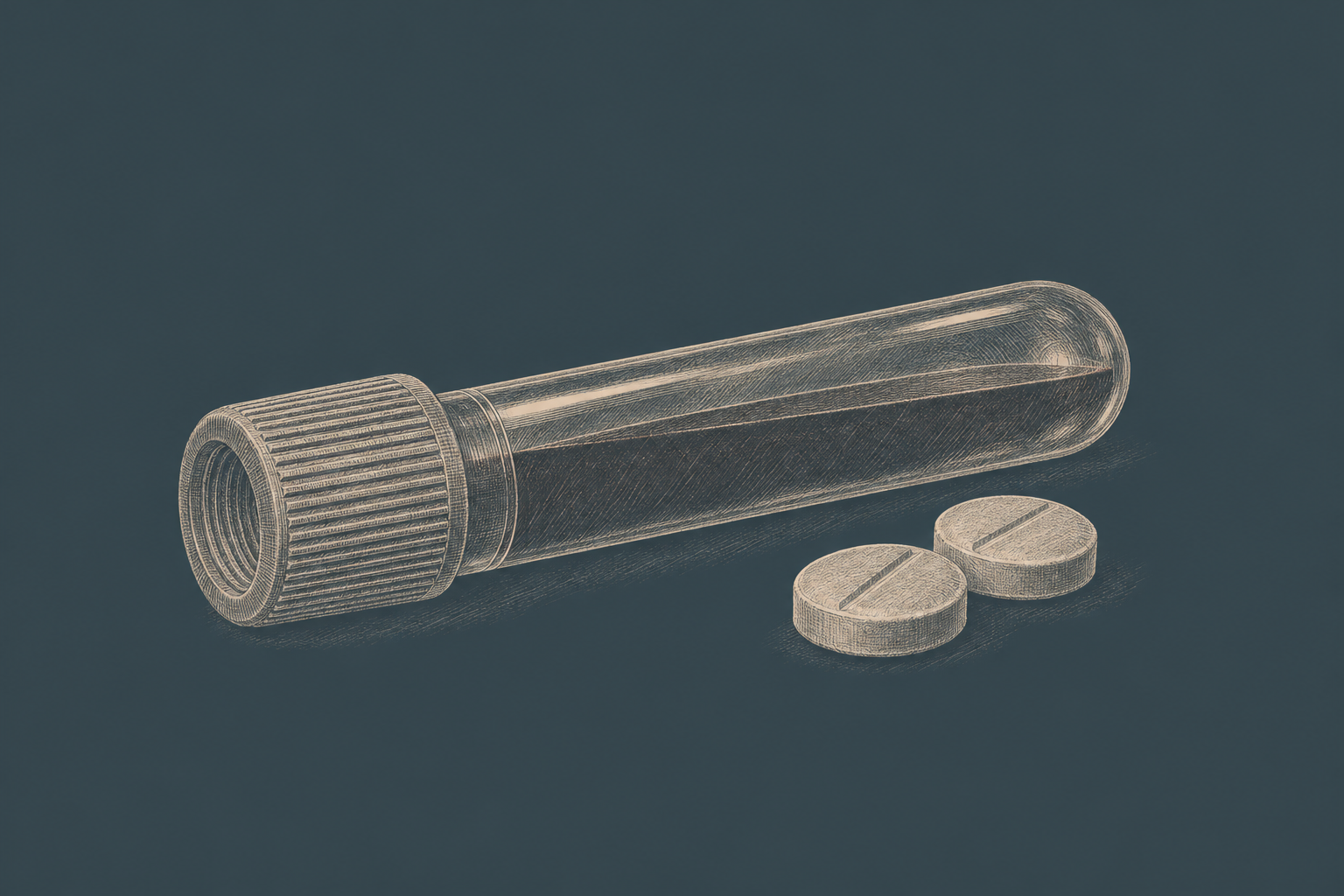
Figure: High-dose biotin can distort lab results. Stop taking it before any blood draw.
How easily this happens was shown in a 2017 trial with six healthy adults. They took 10 mg of biotin daily for one week, exactly the 10,000 µg you find on the pharmacy shelf. Afterwards, 9 of 23 tests that rely on biotin and streptavidin delivered skewed results. In one of the thyroid tests, the TSH value of all six participants suddenly fell below the reference range, even though their thyroid was perfectly healthy (Li et al., 2017).
The US Food and Drug Administration (FDA) issued an explicit warning about this effect that same year, after a fatality was linked to a falsely low troponin reading (Almohanna et al., 2019). Troponin is a cardiac marker doctors use to detect a heart attack. For the topic of hair, another finding is arguably even more relevant. High biotin doses can distort thyroid values to the point where the lab report mimics Graves' disease, meaning an overactive thyroid (Kummer et al., 2016). This interference is well established.
What good is the most careful thyroid check if the very vitamin you are taking for your hair skews the result? When it comes to hair loss, the thyroid is one of the first things worth investigating. What a blood value within the normal range actually tells you about your hair follicles (and what it quietly leaves out) I have covered in a separate article.
What can you actually do before reaching for biotin?
The studies point to a clear sequence, one that starts with the cause of your hair loss and only arrives at any individual nutrient right at the end. That is the exact opposite of what the supplement aisle suggests.
- Get the cause looked into. Talk to your GP or dermatologist about iron stores, thyroid function, hormones and any medications you take. Mention diets, infections or periods of stress from the past few months as well. If a biotin deficiency is suspected, have your biotin level measured, ideally twice on separate days. I would not take anything on a hunch.
- Read the label. Is biotin listed as a single ingredient or as part of a blend? How many micrograms are in one tablet? The percentage figure always refers to the 50 microgram nutrient reference value. It has nothing to do with your personal requirements.
- Take the risk situations seriously. Are you taking isotretinoin or valproic acid, are you pregnant, or is your diet very one-sided? Then ask your doctor whether a biotin supplement makes sense and, if so, at what dose.
- Stop taking biotin before any blood draw. I would recommend a break of at least 48 hours, and that includes biotin in shampoos and hair serums. Tell your doctor you have been taking biotin before she runs the tests, not after.
- Give your hair time. Because the hair cycle moves slowly, I would not draw any conclusions before three months have passed. Track changes with photos taken in the same light. That tells you far more than counting hairs in your brush every morning.
Anyone without a biotin deficiency who skips the biotin tablets is not missing out on anything, based on what we currently know, and the money is better spent on a thorough search for the actual cause anyway. If biotin has worked well for you, I am not here to talk you out of it. I have shown you what the studies actually say. As far as I am concerned, that settles it.
Why hair falls out in the first place, and which levers exist beyond capsules and tablets, I cover in detail in my book "Bis in die Haarspitzen gesund." There I put every hair vitamin in context, along with iron, zinc and the blood values that genuinely tell you something when hair loss is the issue. The book comes out on 9 February 2027. Head over to the book page and add your name to the list. You will be the first to know where to get it.
Next time you find yourself standing in front of the biotin shelf, go ahead and pick up the pack. Do the quick maths on how many times your actual daily requirement is sitting in that bottle. Then put it back down and get tested for what you are genuinely missing first. With that result in hand, you make the call yourself, and you will make it better than any label ever could. And if it turns out to be biotin after all, at least you will have a real reason for taking it.
My hair serums. CuraCap Pure and Men each contain 7 ingredients: water, undenatured alcohol, biotin, vitamins B3, B5 and B6, and vitamin C. Sensitive is formulated without alcohol and without fragrance. You apply the serum directly to the scalp and do not rinse it out. The serums are available at www.curacap.ch/en/shop. Delivery is normally to Switzerland and Liechtenstein. If you are based in the EU, add your name to the interest list in the shop and we will find a way to get it to you.
FAQ
How long does it take for biotin to work for hair loss? If you have a confirmed biotin deficiency, you may notice early improvements after a few months, because hair grows only about one centimetre per month. Without a deficiency, no effect has been established. If you see no change after three months, work with your doctor to keep looking for the underlying cause.
Does biotin help with hereditary hair loss? There is no evidence for that. Hereditary hair loss occurs because the hair follicles are sensitive to the hormone dihydrotestosterone. A study testing biotin alone for this type of hair loss does not exist. The only more recent randomised study using biotin as a single ingredient ran for 14 days in ten healthy men without hair loss (Valentim et al., 2024).
How much biotin per day makes sense? Since 2014, the EFSA has listed 40 micrograms per day as the adequate intake for adults. A varied diet covers this amount. Significantly higher doses are only warranted if there is a medical reason.
Do I need to stop taking biotin before a blood test? At high doses, yes. Biotin interferes with many lab tests, including thyroid values and cardiac markers. I recommend a break of at least 48 hours. Let your doctor know beforehand that you are taking biotin.
Does biotin in shampoo do anything? A shampoo stays in contact with the scalp for only a few minutes before being rinsed out. I am not aware of any reliable studies showing that biotin delivered this way has any effect on hair growth.
References
- Regulation (EU) No. 1169/2011 (eur-lex.europa.eu)
- Patel DP, Swink SM, Castelo-Soccio L. A Review of the Use of Biotin for Hair Loss. Skin Appendage Disord. 2017;3(3):166–169. PubMed 28879195
- Almohanna HM, Ahmed AA, Tsatalis JP, Tosti A. The Role of Vitamins and Minerals in Hair Loss: A Review. Dermatol Ther (Heidelb). 2019;9(1):51–70. PubMed 30547302
- PubChem, CID 171548 (pubchem.ncbi.nlm.nih.gov)
- EFSA Panel on Dietetic Products, Nutrition and Allergies (NDA). Scientific Opinion on Dietary Reference Values for biotin. EFSA Journal. 2014;12(2). doi:10.2903/j.efsa.2014.3580
- Valentim FO, Miola AC, Miot HA, Schmitt JV. Efficacy of 5% topical minoxidil versus 5 mg oral biotin versus topical minoxidil and oral biotin on hair growth in men: randomized, crossover, clinical trial. An Bras Dermatol. 2024;99(4):581–584. PubMed 38688776
- Schulpis KH, Georgala S, Papakonstantinou ED, Michas T, Karikas GA. The effect of isotretinoin on biotinidase activity. Skin Pharmacol Appl Skin Physiol. 1999;12(1-2):28–33. PubMed 10325581
- Trüeb RM. Serum Biotin Levels in Women Complaining of Hair Loss. Int J Trichology. 2016;8(2):73–7. PubMed 27601860
- Soleymani T, Lo Sicco K, Shapiro J. The Infatuation With Biotin Supplementation: Is There Truth Behind Its Rising Popularity? A Comparative Analysis of Clinical Efficacy versus Social Popularity. J Drugs Dermatol. 2017;16(5):496–500. PubMed 28628687
- Samadi A, Ketabi Y, Firooz R, Firooz A. Efficacy of intramuscular injections of biotin and dexpanthenol in the treatment of diffuse hair loss: A randomized, double-blind controlled study comparing two brands. Dermatol Ther. 2022;35(9):e15695. PubMed 35791704
- Proksch E, Bartylla S. Effectiveness, Tolerability, and Acceptance of a Food Supplement in the Management of Non-Illness-Related Hair Loss and Thinning. J Cosmet Dermatol. 2026;25(5):e70852. PubMed 42144810
- Li D, Radulescu A, Shrestha RT, Root M, Karger AB, Killeen AA, et al. Association of Biotin Ingestion With Performance of Hormone and Nonhormone Assays in Healthy Adults. JAMA. 2017;318(12):1150–1160. PubMed 28973622
- Kummer S, Hermsen D, Distelmaier F. Biotin Treatment Mimicking Graves' Disease. N Engl J Med. 2016;375(7):704–6. PubMed 27532849
Dr Holger Scheib is a chemist and Honorary Associate Professor at the University of Queensland. As “The HealthChemist” he translates research on ingredients and nutrition into plain language. More about me
Shall I send you the next article?
I write irregularly but thoroughly: new articles, honestly sorted into proven, plausible and hypothesis. No spam, no sales funnel.
Last updated: 16 November 2026