Nutrition
Why can't I stick to a diet? Leptin, ghrelin and hunger
After losing weight, your leptin drops, your ghrelin rises, and that's still the case a year later. What studies show and how you can tell what keeps you full.

In the year 2000, a study began in Boston that pitted four famous diets against each other. 160 overweight adults with high blood pressure, abnormal blood lipids, or elevated blood sugar were randomly assigned to one of them. Some ate the Atkins way, cutting carbohydrates almost entirely; others counted calories with Weight Watchers; a third group followed the Zone diet; and the fourth cut fat according to Ornish. A year later, depending on the diet, between one in three and one in two participants had dropped out. Which of the four diets someone had been assigned to made no measurable difference to the weight lost in the end. What did make a difference was how closely each person reported sticking to their diet (Dansinger et al., 2005).
You may have similar books on your shelf, keto next to intermittent fasting, clean eating next to a detox programme. Then you know how it goes. In the first few weeks, the scales move. At some point, hunger gets louder and louder, until one day that book ends up next to all the others. The various nutrition schools disagree on almost everything, yet for this moment they all have the same explanation ready: you lacked discipline. I think that explanation is nonsense. Why so many of us give up simply could not be answered with the numbers from Boston. A large part of the answer comes from two hormones that shift measurably after weight loss.
> AT A GLANCE: After a strict diet, the hormone leptin falls, the signal your fat tissue sends to the brain to report full stores. At the same time, the hormone ghrelin rises, the one that accompanies your appetite before every meal. Both can still be measured in the blood a year later, alongside a greater sense of hunger before eating. Whether your body uses this to defend its old weight or adjusts to the new one remains an open question. In either case, this hunger has nothing to do with a lack of discipline. In the most important study on this, 50 adults began a weight-loss programme and lost an average of 13.5 kg. Leptin, ghrelin, and hunger had still not returned to their original levels 62 weeks after the start (Sumithran et al., 2011). As of: November 2026.
What does your brain actually use to build hunger?
Hunger originates in the brain, which calculates it from messenger substances arriving from across the body. For your question, two of them matter most.
The first messenger is called ghrelin, and it comes primarily from the stomach. We have known how this hormone behaves across the day ever since ten healthy volunteers in Seattle allowed blood to be drawn 38 times within 24 hours while receiving their meals at fixed times. Before each meal, their ghrelin levels rose to nearly double. Within an hour of eating, they fell back to their lowest point (Cummings et al., 2001).
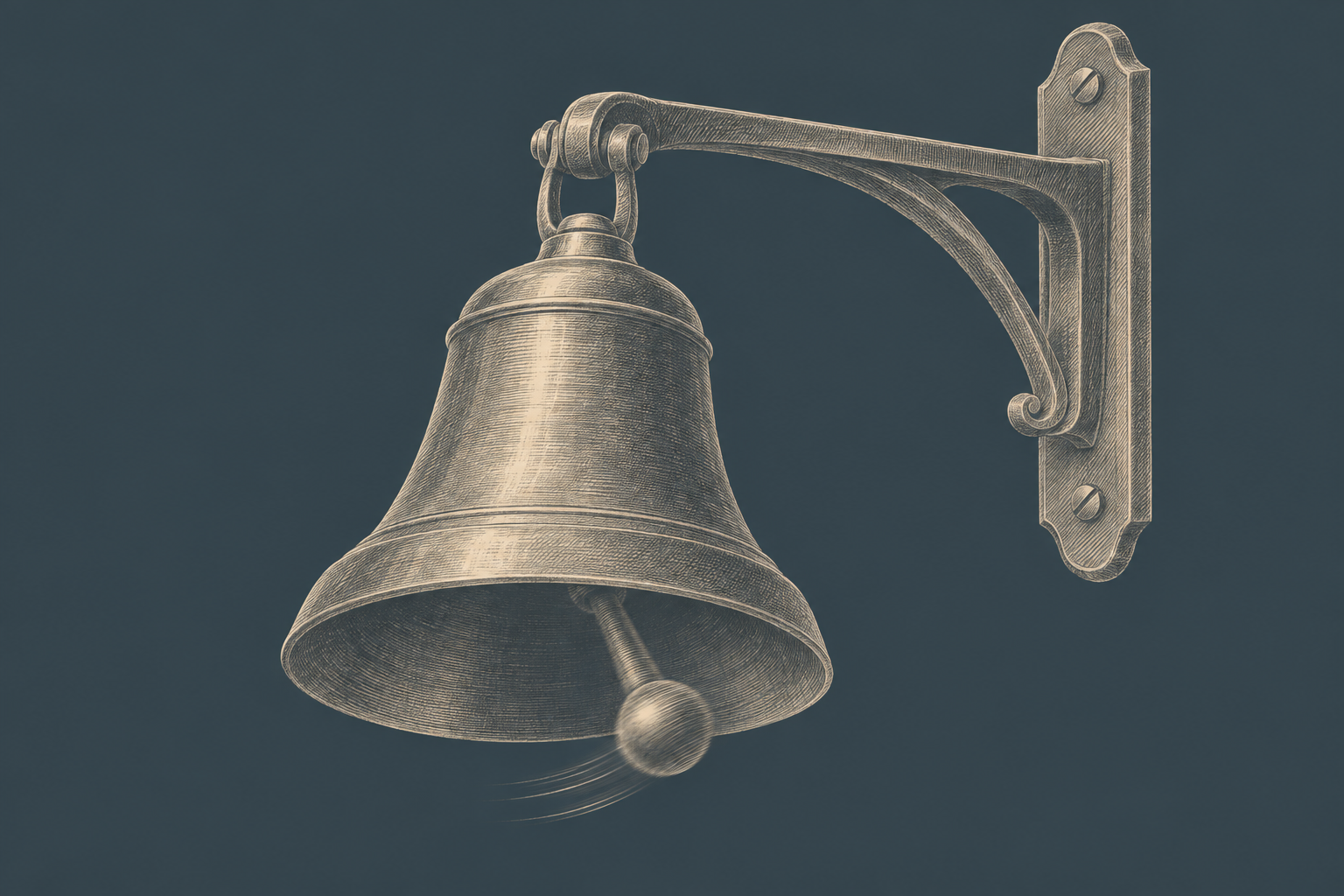
Ghrelin rings like a break-time bell at the hours when you normally eat.
Ghrelin reminds me of a school bell. Anyone who hears it ring thinks of their packed lunch. The bell follows the timetable you have taught your body. In people who habitually eat lunch early, ghrelin reaches its peak earlier than in people with a later lunch break (Frecka and Mattes, 2008). Does the bell actually trigger hunger? The same study casts doubt on that, because in their measurements hunger tended to precede ghrelin rather than the other way around. The only thing we can say with confidence is that both rise together.
The second messenger is called leptin. It is produced by your fat cells, and the more fat we have stored, the more of it they release. In 275 normal-weight and overweight individuals, leptin levels tracked closely with body fat percentage (Considine et al., 1996). Leptin works much like the fuel gauge in your car. As long as the needle sits high, you do not think about filling up. Once it drops, you naturally start looking out for the next petrol station.
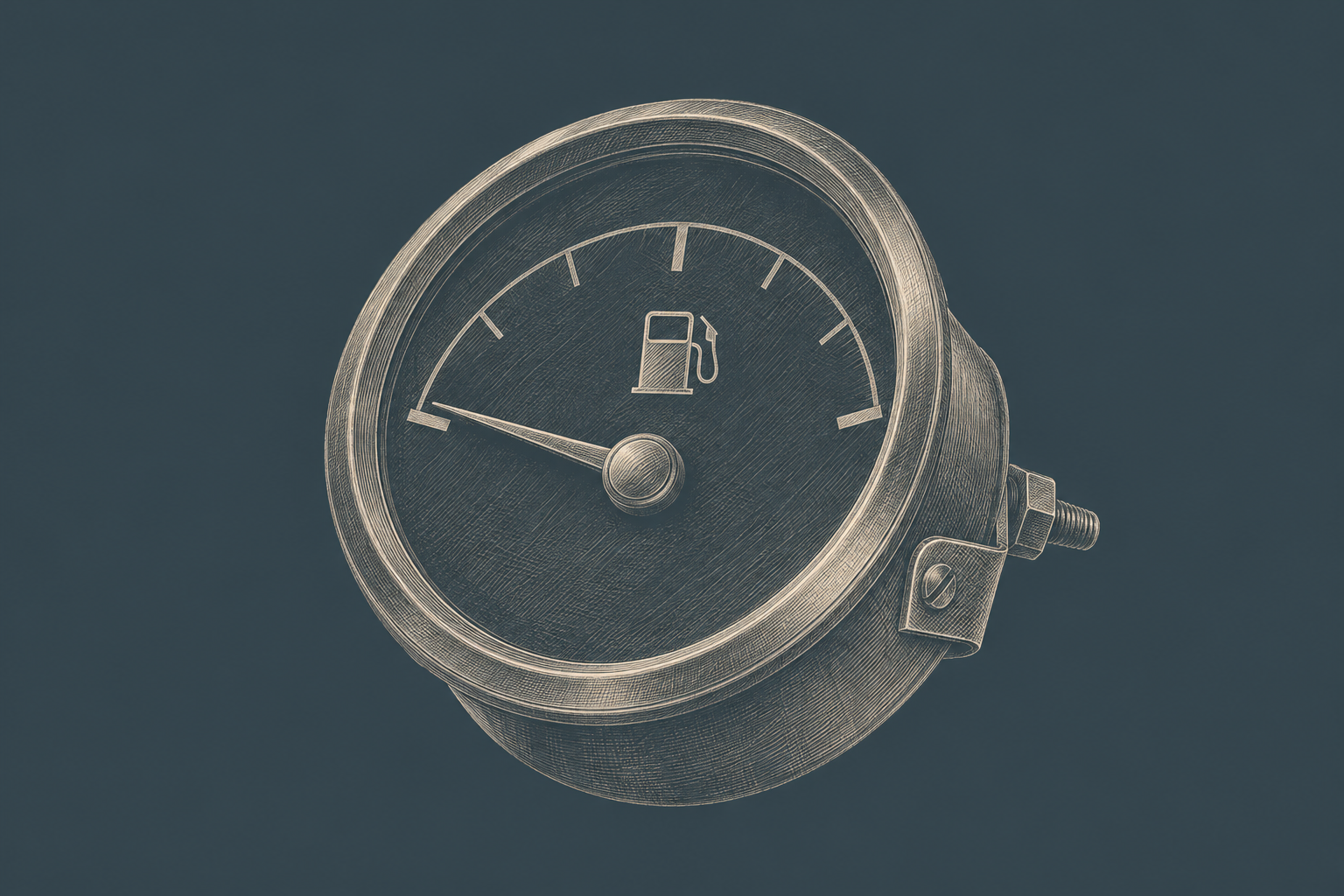
Leptin reports the fill level of the fat stores to the brain. When it drops, the brain reads lower reserves.
Does our brain actually read this fuel gauge? An experiment from New York supports that idea. Ten volunteers were kept at a body weight 10% below their starting point, at which point their energy expenditure and thyroid hormones declined. Once the researchers raised leptin levels back to their pre-weight-loss values by injection, both returned to where they had been before (Rosenbaum et al., 2005).
What Happens to Leptin and Ghrelin When You Lose Weight?
A 2011 study from the University of Melbourne looked into exactly this question. 50 overweight adults without diabetes started a ten-week weight loss programme based on a very strict diet. On average, they lost 13.5 kg. Afterwards, their leptin had dropped, their ghrelin had risen, and their hunger was greater than before the diet. What I find particularly striking is what the researchers measured 62 weeks after the start, meaning one year after the programme ended. Leptin and ghrelin had still not returned to their previous levels. The increased hunger had persisted as well (Sumithran et al., 2011).
By that final measurement, only 34 of the original 50 participants had stayed in the study, and they had regained roughly half the weight they had lost. That is how a Norwegian research group from Trondheim summarised it, having taken their own measurements in different people seven years later. What happens to hunger when the weight stays off? In Trondheim, 100 severely overweight adults began an eight-week formula diet of 550 to 660 kilocalories per day. After returning to normal eating, they weighed an average of 18 kg less. 71 of them came back for a follow-up measurement just over a year later and had largely maintained their new weight. Their ghrelin was still elevated and their hunger before meals was greater than before the diet. After eating, however, those same people felt fuller than they had before, something that had not been observed in Melbourne (Nymo et al., 2018). The Melbourne study was funded in part by the Australian government's national research body. In Trondheim, the money came from public Norwegian sources, with the diet products supplied by the manufacturer.
In nutrition, almost everyone speaks with the same confidence. I'd rather be upfront with you about how well something is actually supported by evidence. For that, I use a traffic light system. Green means proven, as far as that word can ever apply. Yellow means plausible. Red means hypothesis. That leptin drops and ghrelin rises after weight loss gets a green light from me, because several independent research groups have measured it. That ghrelin remains elevated a year later has been shown by two of them. For leptin after one year, I am relying on Melbourne alone for now, since it was not measured in Trondheim.
How far does that take you? Both studies looked at significantly overweight people who had lost 13 to 18 kg through a very strict diet. Whether your hormones shift in the same way after losing four kilos with intermittent fasting, nobody has measured that carefully yet, as far as I know.
Is Your Body Fighting You, or Just Recalibrating?
The research groups agree on the numbers. What those numbers mean is where they part ways. The team from Melbourne reads the hormonal shift as resistance. In their interpretation, the body notices its shrinking reserves and adjusts its hormones to push weight back up. You may know this idea as the set-point theory.
The Norwegian researchers push back with a comparison that rarely gets made in this field. They placed 34 of their participants alongside 33 people without significant excess weight (people whose weight was stable, who were not dieting, and who carried similar amounts of fat mass and lean mass). Hunger and ghrelin did not differ between the two groups. Before losing weight, the participants with obesity had actually had less ghrelin in their blood than the comparison group (DeBenedictis et al., 2020). In the Norwegian reading, your body is not fighting you at all. After losing weight, it simply has the appetite that belongs to a lighter body.
Does greater hunger at least predict who regains weight? Among 36 participants in Trondheim, it did not, though the authors themselves call for larger studies (Nymo et al., 2019). And in Glasgow, 15 women reported no increase in hunger at all after losing nearly 14 kg, even though their leptin had dropped and their ghrelin had risen (Thom et al., 2020).
Honestly: which of the two interpretations is correct, nobody really knows yet. On my traffic light, both sit at red. Red means the proof is still outstanding. Neither has to be wrong.
For your practical question, this dispute matters less than you might think. If your hunger gets louder after a few weeks of dieting, that is in either case your body's response to the lost weight, one that shows up in the blood. That kind of hunger has nothing to do with a lack of willpower, as far as I am concerned.
Does that mean you are at the mercy of your hunger? I do not think so. A way of eating that leaves you constantly hungry does, however, require you to go up against your own hormones day after day. In my experience, hardly anyone sustains that over the long term. I would therefore measure any dietary approach first against one straightforward question: does it keep you full? The best-studied tools for that are protein and dietary fibre.
What protein and fibre actually do for your satiety
How much of a difference protein can make is shown by a small study, again from Seattle. 19 people first ate a diet providing 15% of calories from protein for two weeks, then (keeping total calories the same) switched to a diet with 30% protein and correspondingly less fat for another two weeks. Even during that phase, they reported feeling noticeably fuller. They were then allowed to eat as much of the high-protein diet as they wanted for twelve weeks. They spontaneously consumed around 440 kilocalories less per day and lost an average of 4.9 kg. Their leptin fell and their ghrelin rose, just as in the Melbourne data. Their appetite remained lower than at the start nonetheless (Weigle et al., 2005). The study was funded by the US National Institutes of Health. There was no control group, though, and 19 participants is a thin basis.
What has been added since? A 2020 review pulled together the controlled studies in healthy adults that had pitted protein against another diet at the same calorie level. Across the 49 publications looking at the hours following a single meal, protein reduced hunger, increased the sense of fullness and suppressed ghrelin. In the 19 studies covering longer periods, that advantage no longer held, which is why the authors themselves describe the evidence there as inconclusive (Kohanmoo et al., 2020). That a high-protein meal keeps you fuller in the hours afterwards sits firmly on green for me. Whether more protein also curbs your hunger over months sits on yellow: the Seattle results make it plausible, but it has not been proven.
With fibre, the picture is more sobering than most nutrition guides would have you believe. When a systematic review analysed 107 short-term comparisons across 38 different fibre sources, appetite fell in only 39% of them compared with the respective control diet (Clark and Slavin, 2013). Why? "Fibre" is an umbrella term for substances that have little in common chemically. As a chemist, I would never lump bran and pectin together. A second review sorted fibres by their properties. Viscous fibres (pectins, β-glucans and guar gum) that form a thick gel with water suppressed appetite in 59% of comparisons; the less viscous fibres managed only 14% (Wanders et al., 2011). You'll find β-glucans in oats and barley, pectins in apples and many other fruits.
And how much do individual foods differ? At the University of Sydney, small groups of 11 to 13 people each ate 38 different foods in portions of 240 kilocalories and then rated their fullness over the following two hours. White bread was set at 100. Boiled potatoes reached 323; a croissant came in at 47. The same number of calories in potato form delivered seven times the satiety of a croissant (Holt et al., 1995). Foods with more protein, more fibre and more water scored better. As a rule, the heavier a portion at the same calorie count, the more filling it was. A high fat content, on the other hand, pushed the satiety score down.
How do you recognise a way of eating that actually keeps you full?
None of these studies crowns a single dietary approach the winner. In Boston, none of the four diets outperformed the others. In Stanford, 609 adults later spent a year eating either low-fat or low-carb and lost roughly the same amount of weight on average, 5.3 and 6.0 kg. The researchers also tested whether a genetic pattern or insulin response could predict which of the two approaches would work better for whom. Neither factor was helpful (Gardner et al., 2018). Blood type was not among the characteristics examined. The findings do, however, point to five questions you can put to any dietary approach.
- Are you still full in week ten? Your hormones shift as you lose weight, which means the first two weeks tell you very little. I would judge a way of eating by whether I still leave the table satisfied after two to three months.
- Does every meal contain protein? That could be eggs, fish, legumes, cottage cheese or meat, depending on what agrees with you. The satiating effect in the hours after a meal is well documented. I would spread the protein across the day rather than concentrating it in one sitting.
- Is there enough volume on your plate? Potatoes, vegetables, soups and fruit bring a lot of water and relatively few calories. A dietary approach that leaves you mainly with small, fat-rich portions has a harder time keeping you full, based on the Sydney data. Which of these foods actually suit you is a separate question. Potatoes, for example, appear on the list of foods to avoid for blood types 0 and A under the blood type diet, while they are considered neutral for B and AB.
- What kind of fibre are you eating? Oats, barley and apples provide the viscous, gel-forming fibres that most consistently reduced appetite in the comparisons I looked at. The word "high-fibre" on a packet is not enough for me.
- Is hunger built into the programme? Some approaches sell you the feeling of hunger as proof that they are working. Based on everything we know about leptin and ghrelin, that is a warning sign for me.
These five questions tell you whether you can stick with a particular way of eating. They do not tell you where to start. But you have to start somewhere. I found my own starting point after spending time in hospital in September 2023 with an acute intestinal illness. Since then, my wife Christine and I have consistently followed the blood type diet developed by Dr. Peter J. D'Adamo. For me, with blood type A, that meant cutting out dairy and red meat, among other things. Today, approaching my late 50s, I feel healthier than I did in my mid-30s. That is my personal experience. The blood type diet has a scientific basis, even if it has not reached medical consensus. The fact that fewer studies exist on it than on keto or low-fat does not surprise me, because that kind of research is rarely funded. As a starting point it convinces me, because it begins with something you already bring to the table yourself, rather than prescribing the same rules to everyone. Our blood type courses grew out of that experience. Whether eating for your blood type also keeps you full is something you then check with the same five questions.
If a previous dietary approach fell apart because of hunger, then in my view the problem was not a lack of willpower. You were hungry. And that hunger had causes that can be measured. When you come across the next nutrition book, do not ask first how quickly you will lose weight. Turn instead to the page that shows what you are eating in week ten. Only you can find out what keeps you full the longest. You have more say in this than you might think.
My blood type courses. Christine and I have developed a separate video course for each of the four blood types A, B, AB and 0, which I recorded myself. In about an hour you will learn where your blood type comes from and how the concept describes its metabolism. You also receive food lists in three tiers, from well-tolerated through neutral to best avoided, along with a practical guide for breakfast, lunch and dinner. The course is not a weight-loss programme. It does show you, however, where you can start on your plate. Your access remains permanent. You will find all four courses at thalyra.com/blutgruppen. Your blood type is on your blood donor card. If you do not know it, your GP can include it in your next blood draw, or you can pick up a self-test kit from the pharmacy.
FAQ
Is it a lack of discipline if I abandon a diet? Not in my view, if hunger was the reason. After a strict diet, leptin drops, ghrelin rises, and the hunger you feel before meals gets stronger. In the Melbourne study, this was still measurable a full year later (Sumithran et al., 2011).
How long do leptin and ghrelin stay altered after losing weight? At least a year. No study has tracked them beyond that point. For ghrelin, two research groups have shown this, one in Melbourne and one in Trondheim. For leptin at the one-year mark, the Melbourne measurement is currently the only one we have.
Does this apply if I only lose a few kilos? We don't know. The studies looked at people with significant excess weight who had lost between 13 and 18 kg on very strict diets. For small weight losses through an everyday approach to eating, I'm not aware of any comparably thorough measurement.
Does protein really keep you fuller for longer? In the hours after a meal, yes. An analysis of 49 publications found less hunger, a stronger sense of fullness, and lower ghrelin levels. Over weeks and months, the same analysis found the evidence inconclusive (Kohanmoo et al., 2020).
Why did I feel less hungry on keto at first? There's a finding on this from the same Melbourne research group. 39 people followed a ketogenic, very low-calorie diet for eight weeks. While they remained in ketosis, the usual rise in ghrelin didn't occur, and their appetite was lower than it was two weeks after returning to normal eating (Sumithran et al., 2013). In that trial, the increase in appetite only showed up once the ketosis had ended.
Do sleep and stress also affect my hunger? For sleep, the evidence is solid. Across eleven trials involving 172 participants in total, people ate an average of 385 kilocalories more after shortened sleep than after a normal night's rest (Al Khatib et al., 2017). On stress, the clearest picture I have comes from the 15 women in Glasgow who named stress and emotional eating as the main reason for their weight regain (Thom et al., 2020). There's more on this in an article from Naviyara, our nutrition app (currently available in English only).
References
- Dansinger ML, Gleason JA, Griffith JL, Selker HP, Schaefer EJ. Comparison of the Atkins, Ornish, Weight Watchers, and Zone diets for weight loss and heart disease risk reduction: a randomized trial. JAMA. 2005;293(1):43–53. PubMed 15632335
- Sumithran P, Prendergast LA, Delbridge E, Purcell K, Shulkes A, Kriketos A, et al. Long-term persistence of hormonal adaptations to weight loss. N Engl J Med. 2011;365(17):1597–604. PubMed 22029981
- Cummings DE, Purnell JQ, Frayo RS, Schmidova K, Wisse BE, Weigle DS. A preprandial rise in plasma ghrelin levels suggests a role in meal initiation in humans. Diabetes. 2001;50(8):1714–9. PubMed 11473029
- Frecka JM, Mattes RD. Possible entrainment of ghrelin to habitual meal patterns in humans. Am J Physiol Gastrointest Liver Physiol. 2008;294(3):G699–707. PubMed 18187517
- Considine RV, Sinha MK, Heiman ML, Kriauciunas A, Stephens TW, Nyce MR, et al. Serum immunoreactive-leptin concentrations in normal-weight and obese humans. N Engl J Med. 1996;334(5):292–5. PubMed 8532024
- Rosenbaum M, Goldsmith R, Bloomfield D, Magnano A, Weimer L, Heymsfield S, et al. Low-dose leptin reverses skeletal muscle, autonomic, and neuroendocrine adaptations to maintenance of reduced weight. J Clin Invest. 2005;115(12):3579–86. PubMed 16322796
- Nymo S, Coutinho SR, Eknes PH, Vestbostad I, Rehfeld JF, Truby H, et al. Investigation of the long-term sustainability of changes in appetite after weight loss. Int J Obes (Lond). 2018;42(8):1489–1499. PubMed 29930313
- DeBenedictis JN, Nymo S, Ollestad KH, Boyesen GA, Rehfeld JF, Holst JJ, et al. Changes in the Homeostatic Appetite System After Weight Loss Reflect a Normalization Toward a Lower Body Weight. J Clin Endocrinol Metab. 2020;105(7):e2538–46. PubMed 32301981
- Nymo S, Coutinho SR, Rehfeld JF, Truby H, Kulseng B, Martins C. Physiological Predictors of Weight Regain at 1-Year Follow-Up in Weight-Reduced Adults with Obesity. Obesity (Silver Spring). 2019;27(6):925–931. PubMed 31004405
- Thom G, Dombrowski SU, Brosnahan N, Algindan YY, Rosario Lopez-Gonzalez M, Roditi G, et al. The role of appetite-related hormones, adaptive thermogenesis, perceived hunger and stress in long-term weight-loss maintenance: a mixed-methods study. Eur J Clin Nutr. 2020;74(4):622–632. PubMed 32020057
- Weigle DS, Breen PA, Matthys CC, Callahan HS, Meeuws KE, Burden VR, et al. A high-protein diet induces sustained reductions in appetite, ad libitum caloric intake, and body weight despite compensatory changes in diurnal plasma leptin and ghrelin concentrations. Am J Clin Nutr. 2005;82(1):41–8. PubMed 16002798
- Kohanmoo A, Faghih S, Akhlaghi M. Effect of short- and long-term protein consumption on appetite and appetite-regulating gastrointestinal hormones, a systematic review and meta-analysis of randomized controlled trials. Physiol Behav. 2020;226:113123. PubMed 32768415
- Clark MJ, Slavin JL. The effect of fiber on satiety and food intake: a systematic review. J Am Coll Nutr. 2013;32(3):200–11. PubMed 23885994
- Wanders AJ, van den Borne JJ, de Graaf C, Hulshof T, Jonathan MC, Kristensen M, et al. Effects of dietary fibre on subjective appetite, energy intake and body weight: a systematic review of randomized controlled trials. Obes Rev. 2011;12(9):724–39. PubMed 21676152
- Holt SH, Miller JC, Petocz P, Farmakalidis E. A satiety index of common foods. Eur J Clin Nutr. 1995;49(9):675–90. PubMed 7498104
- Gardner CD, Trepanowski JF, Del Gobbo LC, Hauser ME, Rigdon J, Ioannidis JPA, et al. Effect of Low-Fat vs Low-Carbohydrate Diet on 12-Month Weight Loss in Overweight Adults and the Association With Genotype Pattern or Insulin Secretion: The DIETFITS Randomized Clinical Trial. JAMA. 2018;319(7):667–679. PubMed 29466592
- Sumithran P, Prendergast LA, Delbridge E, Purcell K, Shulkes A, Kriketos A, et al. Ketosis and appetite-mediating nutrients and hormones after weight loss. Eur J Clin Nutr. 2013;67(7):759–64. PubMed 23632752
- Al Khatib HK, Harding SV, Darzi J, Pot GK. The effects of partial sleep deprivation on energy balance: a systematic review and meta-analysis. Eur J Clin Nutr. 2017;71(5):614–624. PubMed 27804960
Dr Holger Scheib is a chemist and Honorary Associate Professor at the University of Queensland. As “The HealthChemist” he translates research on ingredients and nutrition into plain language. More about me
Shall I send you the next article?
I write irregularly but thoroughly: new articles, honestly sorted into proven, plausible and hypothesis. No spam, no sales funnel.
Last updated: 16 November 2026