Myth & Evidence
Antinutrients: why you don't need to fear broccoli
Phytate, oxalate, lectins: three words used online to warn against vegetables, whole grains and legumes. What is true, whom it applies to, and what the large cohort studies show about exactly these foods.
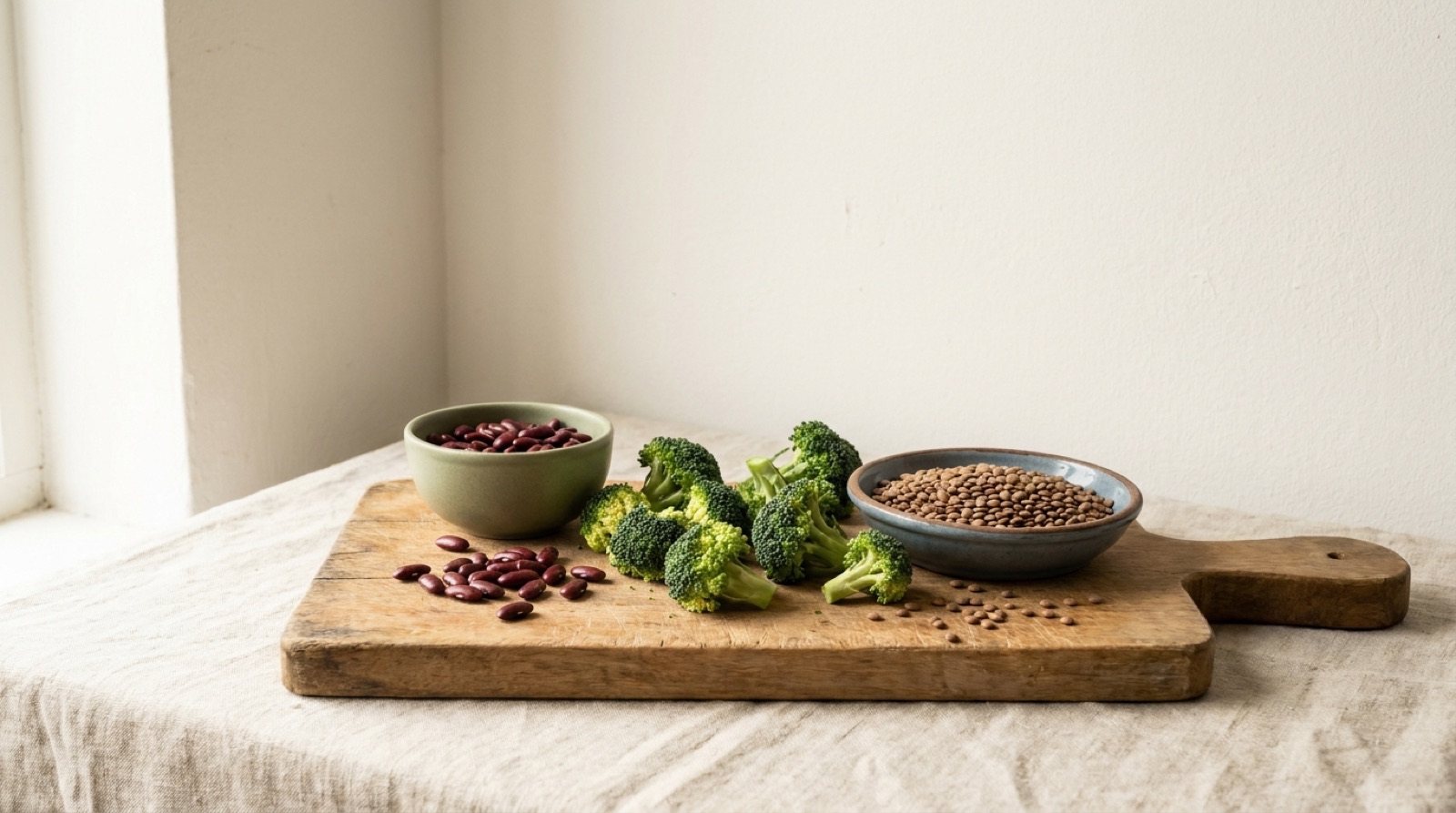
There is a story that fascinates me professionally, because it builds something false out of nothing but true parts.
It goes like this: plants contain substances aimed against us. Phytate binds minerals. Oxalate forms kidney stones. Lectins attack the gut. Plants don't want to be eaten, so they defend themselves chemically. And therefore, the argument concludes, it is precisely the foods sold to you as healthy that are dangerous.
Every one of those sentences has a true core. The conclusion is false all the same. Let's look.
Phytate: it really binds, just not in you
Phytic acid occurs in grains, legumes and nuts and binds iron and zinc. That is not a claim, it has been measured in humans with isotope studies. The mechanism is undisputed, the binding real.
The question is not whether, but how much and in whom.
A review in the British Journal of Nutrition sums it up: iron and zinc deficiency occur where people live mainly on grains and legumes. And then follows the sentence no one in the antinutrient story quotes: in a balanced diet containing animal protein, a high intake of legumes is not considered a risk to mineral supply.
Sandberg AS. Br J Nutr. 2002;88(Suppl 3):S281–S285. PMID 12498628.
On top of that: soaking, sprouting, fermenting and heating break phytate down. Sourdough does it. Cooking does it. Humans have done this for millennia without knowing the mechanism.
And the other side? There are laboratory studies that even attribute protective properties to phytate (antioxidant, metal-binding, anticancer in cell models). I mention them here only to place them: these are mostly cell and animal data.
Vucenik I, Shamsuddin AM. Nutr Cancer. 2006;55(2):109–125. PMID 17044765.
For protection in humans that is not enough. That is a hypothesis, not a finding. I don't build a counter-myth.
Oxalate: relevant for a few, irrelevant for most
Oxalate forms poorly soluble crystals with calcium. Kidney stones often consist of them. The mechanism is undisputed.
The decisive study comes from three large prospective cohorts with over 240,000 participants combined and 4,605 newly occurring kidney stones. Those who ate the most oxalate had, compared with those eating the least, a 22 percent higher risk in men and 21 percent in older women. In younger women: no association. Spinach supplied over 40 percent of dietary oxalate.
The authors write themselves: these data do not implicate dietary oxalate as a major risk factor for kidney stones.
Taylor EN, Curhan GC. J Am Soc Nephrol. 2007;18(7):2198–2204. PMID 17538185.
One detail is remarkable: the risk was higher in men with low calcium intake. Calcium binds oxalate in the gut, so it isn't absorbed in the first place. Anyone who fears oxalate and therefore avoids dairy makes worse exactly what they mean to prevent.
Oxalate is relevant for people with recurrent calcium-oxalate stones, with hyperoxaluria, with very low fluid intake, and for anyone taking high-dose vitamin C. Because vitamin C is partly metabolised to oxalate in the body. From 1,000 milligrams a day as a supplement, stone risk in men rose by 43 percent. Vitamin C from food: no association. That is the same pattern as with high-dose green tea extract: the food is unproblematic, the concentrate is not.
Ferraro PM et al. Am J Kidney Dis. 2016;67(3):400–407. PMID 26463139.
For everyone else, a spinach salad is not a risk. It is a spinach salad.
Lectins: a real poison the cooking pot destroys
Here it gets interesting, because the warning is justified, only in an entirely different place than it is usually voiced.
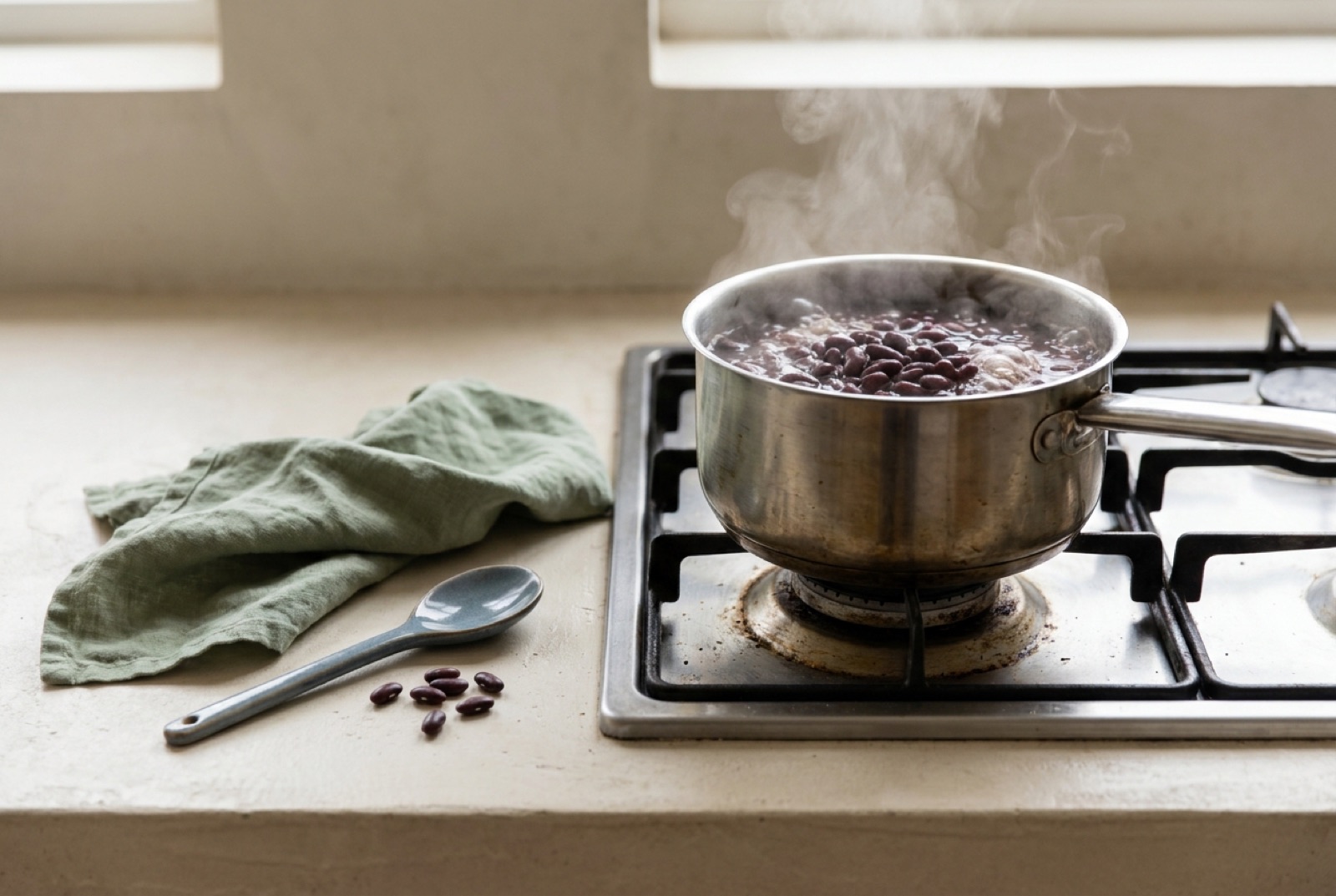
Raw kidney beans contain phytohaemagglutinin, a lectin that really is toxic. There are documented cases: an eight-year-old girl with hypovolaemic shock and acute kidney injury after eating insufficiently cooked beans.
Haile AM et al. Int J Emerg Med. 2026;19(1):49. PMID 41714947.
That is not scaremongering. That is food chemistry. Raw beans do not belong on a plate.
And now the decisive part: phytohaemagglutinin is heat-labile. It breaks down on cooking. Food-chemistry work shows that only poorly cooking beans (those that stay hard even after long cooking) still contain active lectin.
Cominelli E et al. Food Chem. 2020;321:126680. PMID 32247181.
The whole rule is therefore to boil them vigorously, not merely to soak them and warm them briefly. It has stood in cookbooks for generations, because our grandmothers knew the effect long before anyone knew the molecule.
And what do the data say about the foods themselves?
That is the question the antinutrient story never asks. We don't have to speculate about individual molecules. We can look at how people fare who eat a lot of exactly these foods.
A dose-response meta-analysis in the BMJ, 45 studies: per 90 grams of whole grain a day, the risk of coronary heart disease was 19 percent lower, cardiovascular disease 22 percent, all-cause mortality 17 percent.
Aune D et al. BMJ. 2016;353:i2716. PMID 27301975.
A meta-analysis with over 2.28 million participants and nearly 192,000 deaths arrives at the same order of magnitude.
Benisi-Kohansal S et al. Adv Nutr. 2016;7(6):1052–1065. PMID 28140323.
And legumes, the most phytate- and lectin-rich foods of all? Over 367,000 people, 18,475 cardiovascular cases: those who ate the most had a 10 percent lower risk.
Marventano S et al. Public Health Nutr. 2017;20(2):245–254. PMID 28077199.
The suspected foods, of all things, are associated with lower mortality.
The honest placement
I must say two things so this article does not itself become counter-propaganda.
First: these are observational studies. They show associations, not causes. People who eat a lot of whole grain smoke less and move more. You adjust for that as well as you can, but a residue remains. That is why this article is labelled plausible and not proven. No one will run a randomised trial assigning people whole grain for thirty years.
Second: the mechanisms are real. Phytate binds iron. Oxalate forms crystals. Lectins are toxic. Anyone who infers from these true sentences that vegetables are dangerous makes an error that has nothing to do with chemistry and everything to do with logic: they confuse the existence of a mechanism with its significance.
A molecule that can do something doesn't inevitably do it — not at this dose, not in this matrix, not in this body.
What I do
I cook beans thoroughly. I eat calcium with my spinach. I soak legumes, because they are easier to digest that way.
And I eat broccoli.
Dr Holger Scheib is a chemist and Honorary Associate Professor at the University of Queensland. As “The HealthChemist” he translates research on ingredients and nutrition into plain language. More about me
Shall I send you the next article?
I write irregularly but thoroughly: new articles, honestly sorted into proven, plausible and hypothesis. No spam, no sales funnel.
Last updated: 22 August 2026